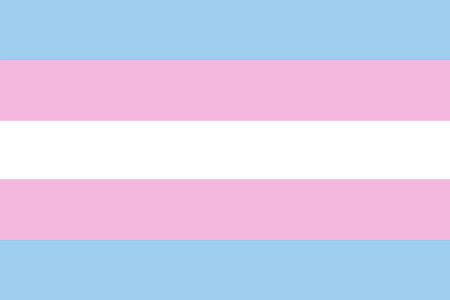
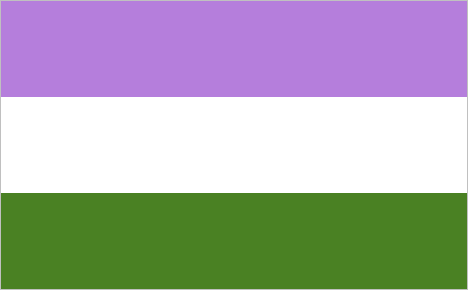
Transgender Awareness Week

For Transgender awareness week, I kind of wanted to say something as someone who is trans.

The most important part of spreading awareness should be about the idea of not making assumptions.

Every trans person experiences things differently. Every one has their own narrative.

There really is no such thing as a single transgender narrative.

Transgender does not automatically mean “third gender”. There are people who identify with the Binary (like me). 

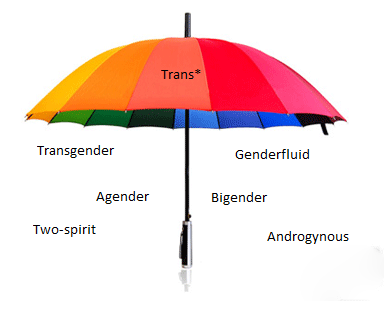
Transgender is an umbrella term that includes non-binaries too, but it doesn’t only belong to non-binary OR binary people exclusively.

A trans person’s legitimacy doesn’t depend on whether they ever have surgery or take hormones.

Not all trans people identify as Queer.

Singular They

This is an essay I wrote for a grammar course, about the use of singular ‘They’, edited a bit:

My essay:

Any applied study of English
grammar would reveal that language comprises a constantly evolving set of
conventions. For this reason, language experts often find themselves warring
over the rules of grammar. These people typically fall into two main factions. Prescriptivists are grammarians
who recommend writers follow “long-established” rules, viewing any deviations
as “incorrect” usage; descriptivists, on the other hand, are linguistic experts who assert that
“a language is defined
by how its users speak and write it, and that language ‘authorities’
can only describe usages, not allow or disallow
them”. One example of a practice under dispute is the use
of they as a singular pronoun, with a
singular, indefinite antecedent. By examining the history of this usage, we can
begin to see how much a language is shaped by the people who use it, often to
the point of persuading even the most inflexible of prescriptivists to bend the
rules a little to reflect changing times.

Dennis Baron, a
professor of English and linguistics at the University of Illinois,
reveals through his research that people have been seeking a common gender pronoun
for more than two centuries. Some past suggestions included hi, le,
hiser, and thon, but
none were universally accepted. Meanwhile, the use of they as a singular, common gender pronoun can be observed in the
works of many well-known writers, from Chaucer to Shakespeare. As Linguist and
writer, Jonathon Owen, points out in his
blog, the disagreements arose when prescriptivists began favouring the use of he as an all-inclusive, singular pronoun
during the eighteenth and nineteenth centuries. This was problematic because the
use of primarily masculine pronouns to refer to a common gender caused readers
to envision a male subject, even when the context did not specify gender. The
result was that many felt excluded—both women and gender non-conforming
individuals alike.

In his discussion of
the history of pronouns on a podcast
by MPR
News, Professor Baron takes us back to the matter of
“correctness”. He notes that in earlier examples of written language, the
resistance to the use of they as a
singular pronoun had more to do with grammatical correctness and logic than
inclusivity. The
pronoun-antecedent
rule holds that a pronoun must agree with its antecedent in both number as well
as gender. Baron gives us the example
phrase:

                                          Everyone loves his
mother
.

The
issue with this phrase, as Baron explains it, is that although his (being singular) agrees in number
with its antecedent, everyone, it
fails to meet the gender-agreement part of the pronoun-antecedent rule, since everyone is an indefinite, singular
pronoun that could refer to either gender. By this rule, using singular they would not be any more correct, as
it would fail the number-agreement part of the pronoun-antecedent rule, they being plural while everyone is singular.

[insert Loosely connected images, displaying prescriptivism]

image
image

Modern day conversations place more
of an emphasis on the question of inclusivity as opposed to convention. The Merriam-Webster
dictionary recognizes that “Though singular they
is old, they as a non-binary pronoun
is new. [It is used] for a person whose gender is known, but who does not
identify as male or female”. Kristen Hare, a media journalist at
Poynter Institute, echoes this observation when
she speaks of print media. In 2014, the Wall
Street Journal
began allowing the use of singular they to refer to contributors that did not identify with a specific
gender. Soon afterwards, the New York
Times
and Washington Post followed.
More and more Universities and Colleges are also making changes to school
policies to include gender-neutral pronouns for students to choose from in
their registration processes.  Data
collected indicates they as one of
the main choices made by gender non-conforming students.

John
Eastwood writes, in his Oxford Guide to
English Grammar
, that in modern times the
use of he as a common gender pronoun
is “less common than it used to be.” Eastwood is of the opinion that singular they is “neater than [her or she]” and is common in informal
contexts.

Other
academics and grammarians have mixed views, however. Some still recommend using
the generic he or she coordinate with
singular, indefinite antecedents—or avoiding pronouns altogether. Dictionaries
such as the Canadian Oxford Dictionary
list the singular use of they as
being “disputed,” though popular, while the Merriam-Webster
dictionary lists it as a respectable secondary option to the old convention,
citing that it’s been used in
both literary and formal contexts alike.
Despite all the recent acceptance in the mainstream, authors Patricia T.
O’Conner and Stewart Kellerman feel that although singular they has a long history in usage, it still has a long way to go
before becoming universally accepted.

In
light of this history, we are left with a question of what to do while the
natural process of language evolution takes place. For the time being, when it
comes to singular they, choosing to
subscribe to the prescriptivist or descriptivist view appears to be a matter of
personal preference. As a student of literature, an aspiring writer, and
someone who identifies as a member of the trans community, I too share the
mixed feelings of many others. I used to think that the rejection of singular they was driven purely by transphobia. I
can see now that this assumption was largely the result of having grown up with
the modern usage and attitudes.  I’ve learned that this fight
was always more about linguistics and the rules of grammar than intentional transphobia.
Although one does have to wonder whether things might’ve been different if non-binary
people came out back when these rules were being made…

While trans people may not
have been part of the picture back when more people were closeted, in
today’s world the use of pronouns cannot be entirely removed from its implications for the trans community.

This Friday (31st March) is Trans Day of Visibility

danielnelsen:

[This post refers to TDoV 2017; other years will have TDoV on a different day of the week]

It’s that time of year again! That awesome day where trans people share their selfies and stories. It’s one of the two largest trans advocacy days, the other being Trans Day of Remembrance (20th November). That day is dedicated to mourning and solemnity, while this day is a day to celebrate being alive! Like last year, I’m not sure of the absolute official hashtag, so I’m guessing there’ll be a variety in use, such as: #tdov #transdayofvisibility #trans day of visibility #trans visibility #trans pride #transresistance #trans resistance

This day has been recognised since 2009 and is increasing in popularity and support each year, but there’s still a long way to go in spreading the word. Visibility is something that the trans community often has to struggle for, so this is our time to step out of the shadows, take pride in who we are, and show the world that we exist and we’re here to stay.

If you are trans

This is your day. No matter your gender – whether you’re male, female, or any nonbinary gender – anyone who isn’t cis (ie. whose gender is different from the gender they were assigned at birth) can participate. This is a great opportunity to get involved in the community and be visible. If you’re comfortable, post a selfie. Share your story. This is your time to be proud of who you are! It can get hard and lonely sometimes, but there’s a whole community here who have your back.

If you are not trans

Please also get involved – don’t leave this day just up to us. Today is a day for you to support and listen to the trans community. Show us some love by reblogging some selfies and reading some stories, whether you browse through the tags listed above or stick to your mutuals. Now is a perfect opportunity to learn about our wonderful community and to look at some beautiful people. It’s a win-win, really.

Above all, I hope everyone has a fantastic TDoV! Have fun and keep it positive.

Androgynous/Feminine Trans Guys

image<—->image

Hi guys. So without turning this into a blog about my transition or something, I feel I should share some of the insights I’ve gained over these past few weeks, just about gender identity and gender expression, since this stuff is still on topic.

If you identify as FTM then you’d be familiar with one or more of the online trans communities out there, including the one on YouTube. You might also be familiar then with some of the divisions and conflicts that exist within the community itself.

Having kind of stepped into this community and looked around a little, I’ve noticed that one of the major points of disagreement among trans people appears to revolve around gender expression, and the various forms of masculinity and femininity that can shine through it.

In particular, there seems to be a lot of negative energy and criticism directed at transgender people that don’t present as stereotypical Male or Female. What I’ve seen is mainly from the FTM side, so I want to comment on that, but I think these same issues seem to exist for certain MTFs as well.

When I say not stereotypical, I’m referring to those FTMs who present themselves in a more feminine way than most (the androgynous or femme FTMs). Some of these guys have had to deal with people telling them that they are not masculine enough to be trans, or that they should simply ‘stay a girl’, or that they should give up their preferred style of dress or cut their hair a certain way in order to ‘pass’ – as if that’s the only goal anyone should ever have when they decide to transition.

I feel like I’ve just gotten an harsh reality check about what I’m going to face in the next few years of my own life… because my ideal gender presentation is the androgynous male look – like Lelouch Lamperouge from the anime Code Geass (That character is the embodiment of my personal masculine ideal). My favourite trans guy on YouTube is this guy (https://www.youtube.com/user/beckdrop/videos). Why? Cause he looks like Lelouch. O.o

Ok, back to the topic. I feel like people need to take a step back and remind themselves what trans identity really is. You don’t just become trans the moment you take your first hormone shot. And if you stop taking hormones, you don’t stop being trans either (unless you genuinely made a mistake and had never truly identified as transgender to begin with). Trans identity is not defined by these visible, tangible, physical details. It is something all trans-identified people experience inside themselves before they come out. Some trans people never come out, never transition, but still carry around the conflicting emotions and thoughts that are associated with gender dysphoria, in varying levels, throughout their lives. Any one of these paths are valid, and taking any one of them doesn’t make you more or less TRANS, since your gender identity is something that has always been and will always be on the inside, whether or not it ever shows on the outside, regardless of other people acknowledging it.
image

Those FTMs that transition and retain some feminine characteristics or habits or ways of self-expression are no less male than those who want to get as far away from femininity as possible in their outward presentation. Why is there a need to have some kind of overblown power struggle over who gets to claim that label and who doesn’t?

Firstly, look around at the world a little – when you’re on the bus, or travelling on vacation. There are plenty of cis men who act super feminine in the way they dress or the way they interact with others. Does that make them less ‘male’? And the cis women in this world that are extremely masculine… are they less ‘female’ identified? If you were to say yes, then you might as well say there is no difference between a butch woman and a pre-T, masculine transguy.

But there is. And where is the difference? It’s in the gender dysphoria that is experienced in an internal way. A butch lesbian is generally ok with her assigned gender. That’s why butch lesbians even exist. Otherwise they’d all claim to be FTM or seek transition.

What makes a trans guy different is that he’s NOT ok with his assigned gender, and he identifies as male on the inside, whether there’s testosterone coursing through his veins or not. But when we transition and begin to be seen as male, we have more freedom to play around with our gender expression. Isn’t the whole idea of transition about finding happiness/self-acceptance?

Cis guys can do whatever they want without being questioned… they may get made fun of, but no one will doubt they are Male. Because they’ve got the body, all the standard male parts. As trans people, if we make any part of physical appearance a requirement for claiming our Male identity we invalidate trans identity yet again, because we’re saying that it’s what’s on the outside that makes one a man.

You can’t just validate some trans guys and invalidate others. The only way to be consistent about what it means to be trans is to place the emphasis on our internal experience of gender, regardless of what that translates to on the outside.

If you emphasise the physical, the visible, then the cis system wins… because you let them apply their rules to you, blending in among them while ignoring the existence of non-binaries and alternative gender expressions. Maybe you’re happy that way, but what about those that don’t fit in? If you’re going to say they are less male for not acting or looking a certain way, then you might as well give up your own struggle, since by society’s narrow standards none of us would ever be seen for who we really are on the inside as long as we go on trying to say that it’s physical characteristics and mannerisms alone that makes a man or woman.

I don’t think there’s anything wrong with living stealth. Transphobia is incredibly hard to bear, especially when combined with your own internal gender dysphoria. It makes sense that some people don’t even want that label ‘trans’ attached to them, and do not feel they belong in the gay community at all. That’s fine, as long as you’re not spreading ignorance and homophobia.

But if it bothers you so much that feminine/androgynous trans guys exist, then just stay away from them. It’s that simple. Their existence doesn’t invalidate your existence. When you criticize non-binaries and/or alternative gender presentations, all you’re doing is hurting your own cause, and hurting others who are very much like you at the core. Gender dysphoria is the common thread that connects us, not which surgeries we get or whether or not we ever decide to go on hormones or how well we fit into the cis binary at any one point in our lives.

If you don’t deny a feminine cis guy his male identity, then you should be able to respect a feminine trans guy’s male identity, even if you may not fully understand it. In an ideal world, we’d all just be able to choose which body we inhabit, but for now the least we could do is try to see each other’s souls.

image<–Lelouch.

Pic From: http://xxajisai-graphicxx.deviantart.com/art/Render-Lelouch-322476909