Are you one of those people who ask “WHY??”when you see someone supporting consensual adult incest? Do not ask that question unless you have the balls to deal with the actual answer. If you’re going to be an anti, at least be an informed anti. Human rights deserves more than two seconds of thought. Two seconds of thought makes for a worthless opinion, because that is what is called a knee-jerk reaction. It’s not an argument, it’s not a thoughtful opinion, it’s a reaction based on whim.
Are you someone who is curious about the facts behind a subject that is often presented in a distorted, dehumanized, dishonest way by popular media and society?
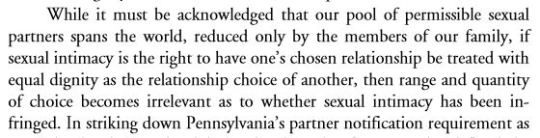
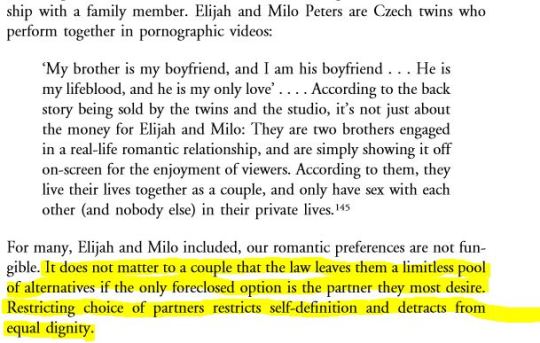
The below is a small list I sent to someone after they asked for a list of articles about consensual incest. I want to expand this list later, but for now, here are some scholarly articles and other well-written pieces and videos you can check out.
The content in these articles/resources might be challenging for some people. I still find some of it challenging on a personal/intellectual level. The important thing is to understand that personal disgust/dislike is not a legitimate reason to deny other people their rights or to pass moral judgement on their lives.
These materials go beyond cousin couples, but the topics discussed provides a big-picture sense of the issues around consanguinamory, and better illuminates where cousin couples fit into this picture, as well as how the stigmatization of other kinds of consensual adult incest affects the way cousin couples are perceived and treated in society. So even though it may seem off-topic for the usual themes of this blog, it is still connected to the themes in important ways.
2. Royal Commission report recommending that incest be legalized (this is an old report but very relevant to the topic). There are 4 or 5 PDF files, one for each part of the report. Once the files are on your computer you can open each one and search for the topic. (Part one has the recommendation in brief. The final part has more detailed argument and conclusion): https://apo.org.au/node/34438?fbclid=IwAR21eYklk6bnooiHL_xuXPgH0OOoyEQyJNgTVEUfhF79ImOxR2byz9TFsIo
5. Rudolf Mandelbaum’s Social Justice Articles: The guy who wrote these wanted to develop his arguments more and make an updated version. It’s worth reading both versions.
Someone in the shipping community (corny-tyrannosaurus) is starting an art campaign to spread awareness about consanguinamory. Consanguinamory refers to Consensual romantic and/or sexual relationships between ADULT relatives. This is in no way or form connected to abusive incest.
Also, this is totally separate from the Shipcest artist list I mentioned earlier in a post, as it’s different in its purpose. This new art campaign is specifically seeking out people who support or are tolerant of consanguinamory in real life. Basically, allies of consanguinamory. The art itself will be focusing on fictional incest ships. Art includes drawings, fanvideos, fanfiction, etc.
You don’t have to be involved in consanguinamory yourself to participate. But if you are, that’s fine too. If you are a content creator and you want to join in creating art specifically to spread awareness of consanguinamory, please follow the link to see the details.
Sorry, the previous link was broken due to a name change. Here is an updated link. If you’re interested, contact Corny Tyrannosaurus on his Tumblr page:
The first step is to simply gather people who think they might be interested in participating. We have already started Phase 2 (where people plan together), but there are still open spaces for several more people to join. Concerns about anonymity and privacy have already been addressed (people can choose to be anonymous for this) but you can ask about it again in the chat group.
So, if anyone out there is a content creator and wants to participate, please see the above link for details and please share this with others you think might be interested.
If you want to support writers that explore consanguinamory (consensual incest) in fiction, please read this. No one should have to deal with hate for exercising their freedom of speech/creative freedom.
This is a message from an author of a book with consanguinamory themes. The novel she wrote is about romance between two half-siblings. The book is called “Forbidden: Our Secret Love: The Larson Family Saga, Book 2.” This message was sent to the blogger FullMarriageEquality (Keith). I am just sharing it here, with permission from FullMarriageEquality:
Dear Keith,
It’s been nearly a year since our last email communication, but I continue to follow your Full Marriage Equality blog. As you may recall, I published Forbidden: Our Secret Love–a beautiful story of love between two adult half-siblings–twenty months ago.
Since I published Forbidden I’ve been stunned by the pervasiveness of incestaphobia in our society. I cannot comprehend what creates so much disgust, hatred and fear over a loving relationship between two consenting adults! Forbidden is continually attacked by reviewers on Amazon and Goodreads despite a very clear warning in the blurb about the subject matter. On May 14th, a reviewer wrote, “This author is sick. Brother sister sexual relations. It doesn’t get much worse than this. I think this is autobiographical. It was pro-incest propaganda.” One star.
This hurts. Forbidden is a story that came from my heart, because I truly believe that love takes many forms, and none are worthy of condemnation. Beyond my personal feelings, these negative reviews are hurting my reputation as an author. Readers who love my other books are so disgusted by the incest in Forbidden that they’ll probably never read another book written by me. As a professional writer, I’m tempted to unpublish the book for this reason. It would break my heart to give up and give in to hate, because I believe in what you and others in the community are doing.
I don’t know if you’ve read Forbidden, but if so, I would deeply appreciate some input from you and/or other consangs. Above all, is the book an accurate portrayal of a consanguinous relationship? Because if it isn’t, I either need to make some changes or delete it altogether. I would welcome comments from the consang community at my author’s email address:
quinnlarsonauthor@outlook.com.
Thanks for all you are doing, and for taking the time to read this lengthy email.
I really need input from folks other than incestaphobes before I decide what to do about this beautiful book that does not deserve all the negativity it’s receiving.
[This is an old post from Tumblr, first posted in July 2014]
The definition of Prejudice is : “preconceived opinion that is not based on reason or actual experience.”
In this post, I am going to discuss my personal experiences with prejudice, and why I think it’s important for people to challenge the way they think about things, that is, if their opinions are hurtful to other people’s freedoms.
I used to be a very critical, judgmental person, who didn’t think twice about cringing along with the rest of them whenever I heard or saw something that was considered ‘taboo’ in society. This only changed when I realized that I was actually ‘one of them’ (potential target) and that I was in denial about it for the longest time because of the fear of being judged. My personal experience has proven to me that it is possible for people to overcome prejudices, even if they are surrounded by them every day from all directions.
How do you do it? You simply begin to think for yourself.
I am going to list here some lifelong prejudices I’ve carried around in my head from childhood to adolescence, and some into adulthood. Then I will go on to explain how I overcame them:
Prejudice #1: True love can only exist between two people, otherwise it’s not true love.
Prejudice #2: Same sex couples shouldn’t raise children, because it would be unfair to the kid, who would either never have a mom or never have a dad.
Prejudice #3: Consanguinamory of any kind is wrong, because you’re not supposed to do those things with family members. Family relations should be chaste at all times, like friends without benefits.
OK. That hurt to write… Because I no longer think that way, about any of it.
╰☆╮Let’s take #2 for instance. When I asked myself why I felt that way, I saw that it was because of how I’ve been raised. I never knew things like divorce or single-parenthood. In my culture the family is a very tight unit that cannot be broken once it has been made, no matter how dysfunctional it may become or how unhappy. Spouses are just resigned to stick it out till death. There’s no such thing as second chances, and divorce is looked down upon… But as I grew up, I got to know people that came from different family structures, and saw that they were no less stable than I was. Yea, there might’ve been a void in their hearts due to the absence of one of their parents, but some of the nicest, most intelligent people I’ve met have come from what would be thought of as ‘broken families.’ It really opened my eyes to the possibility that a kid can grow up healthy and happy outside of a traditional family arrangement.
The family of a same-sex couple would be no different. In the end it’s not about having one of each gender to raise you… it’s more important to be loved by whoever raises you–whether two people, one person, or a group of people. I suspect that those children whose parents were absent weren’t sad because they didn’t have ‘one of each gender’ as a parent… they were sad because they felt unloved by one or the other. Just because you have one male and one female parent, doesn’t automatically mean both will cherish you equally or be responsible or stable. Gender has nothing to do with the characteristics that make a great parent. Those characteristics (reliability, knowledge, understanding, emotional stability, affection, selflessness, etc) can exist independent of sex and gender. Therefore, a same-sex couple has just as good a chance at raising a healthy family as any two people of the opposite sex.
╰☆╮Now, for #3. This one is a little strange… I’m not sure at which age I developed this opinion. I think it sort of grew on me overtime. I remember hearing that brothers and sisters get separate rooms when they hit a certain age. The explanation I always got for this was that they were growing children, so they needed their own spaces. Yet, it was never a big deal for siblings of the same sex to share a room well into their teens.
It was only later, when I learned that many people first experiment within the family than would like to admit, did I begin to see that arrangement in a different light.
Maybe it was a way to suppress something that might have naturally occurred between siblings without social conditioning. So no matter how much people try to act like it’s ‘unnatural,’ they seem to know deep down that it is natural. They create stigma to discourage young people from acting on whatever tendencies they may have growing up, without letting them think for a second that it might be natural to have such inclinations or thoughts. This creates guilt, fear, and self-censoring from a young age–which these same kids then pass onto their own.
When I was growing up, I didn’t have to wonder at these changes since I didn’t have a sibling of the opposite sex, so my arrangements were different. Yet even for me, the self-censorship was hard to challenge. So what finally changed my mind? I might go more into this in another blog, but simply put, it was a story. I used to roleplay with someone while growing up and one of my main characters was a boy who fell in love with his cousin (the other player’s made-up character). It wasn’t meant to happen. I was about 14 when this twist happened in the story. And even back then (in the start), I had the vague, unsupported opinion that it was wrong… Yet their relationship (though fictional) was the most beautiful one to me in the whole story. The boy continued to love her, so deeply that I was gradually persuaded to think differently about consanguinamory altogether. I don’t know if someone might laugh at that–if they might say that fiction is not reality. But I believe that you’d have to be the worst kind of hypocrite to accept something (related to human rights) in fiction while denying it reality. That is nothing less than exploiting a serious subject for entertainment, while ignoring real people’s real trials in the world.
I believe in the power of Fiction because it compelled me to educate myself more about the reality of these kinds of love, and support others who are like my character in real life. Which is why I’m here now.
╰☆╮Addressing prejudice #1: Unlike the above two, this one was largely a personal opinion. I didn’t realize that I was projecting my own idea of what makes a relationship onto people whose minds and hearts worked differently from mine. There was someone in a discussion group I attended once, a guy who said he was polyamorous. He was trying to explain what that meant, saying that he had several lovers and that he loved them all in different ways; that he tried to give them all as much of himself as he could, and that he always felt he had more love left over to give to another person. I couldn’t for the life of me wrap my head around this… because I’ve always believed that if you needed more than one person it meant you hadn’t yet found your Soul Mate.
But now, having been through my own life struggles and developed as a person, I see that I had misunderstood him. Polyamory is not for me because I am a possessive, monogamous person who is apt to jealousy. But polyamorous people don’t feel this way. I learned that they are actually more than happy sharing their lovers with new poly people, and that they’re not really plagued by any feelings of jealousy. Most importantly, they are always honest with each other, so there’s no deception going on, no cheating. Their relationships are mutually agreed upon, and there are no secrets or lies between them.
Now whenever I get disturbed at the thought of sharing the person I love, I remind myself it’s because I am monogamous. It doesn’t work for me, but that doesn’t mean it can’t work for someone else.
☾Final Thoughts
Why was I so full of judgment?
For the same reasons so many others still are – Social conditioning and sheer ignorance. And.. fear of not fitting in.
What did I learn about overcoming prejudices?
I learned that overcoming prejudices didn’t invalidate my identity in any way. It just made me a more open-minded person. It freed me from the maze of inner-contradictions, from the tensions of trying to hold onto beliefs that weren’t really mine to begin with, beliefs that were put into my head from the outside world before I learned to think for myself.
I learned that I don’t have to be polyamorous to support polyamorous rights, that I don’t have to be a gay parent to empathize with and support same-sex families, that the freedom to have romantic consanguineous relations is as much a human right as anything else (because blood is just another physical detail; like skin tone, age, gender or sex).
I have come to believe that if you want to change the way the rest of the world works, you have to begin with yourself first. If you don’t work on identifying and overcoming your own prejudices, how can you expect other’s to do the same for you? Maybe right now you are happy being a conformist, but someday you may find that you desire something that is considered ‘unconventional, taboo, unnatural’ by the rest of society. You shouldn’t have to wait till that day to make a path for other people… a path that you yourself (or your children) will also be able to use, if you ever have the need.
[This is an old post from Tumblr, first posted in July 2014. This was actually my very first blog post and the reason behind starting this blog.]
When it comes to subjects or themes that have social stigma attached to them, it is rare to see them explored in fiction with neutrality. Have you ever watched a film or tv show in which love between cousins is referred to as something distasteful? Something that only unsophisticated, backwards people would engage in?
Consanguinamory themes in fiction:
I’ll give a few examples… In the movie Sweet Home Alabama (which I love to the most part, except for this one bit), there was a fleeting moment of misunderstanding where the main character’s new boyfriend thought that she had once been married to her cousin. Of course, this was a misunderstanding, but his reaction of shock implied that this possibility alone was worse than the fact that she had not told him she had been married before. Then there’s the sitcom, Big Bang Theory (I also enjoy this show, but I hate this one reference), where the character Howard mentions that he had slept with his cousin once. His friends are disturbed by this fact, as well as his girlfriend Bernadette. It’s used as a point of ridicule by everyone who hears of it throughout the show, since it’s mentioned more than once. Howard himself says it like it’s something he half regrets, purely for it’s being a socially unacceptable act rather than any other reason. I am sure there are lots of other examples, though I can’t remember right now off the top of my head. But I know that (in modern fiction or media at least) this topic is rarely mentioned in a neutral tone or with any kind of true empathy.
LGBTQ themes in fiction:
There are also many instances in other films, books, or shows where there are ‘gay’ moments, used mostly to tease the audience, because we all know perfectly well that the characters having these moments are straight in the context of the story. I’ve seen this in anime alot, where we are given blatantly obvious fan service scenes where two girls are in scantily dressed poses together, lingering at the edges of a potential sexual encounter between the two – feeding just enough to the imagination without committing to anything. These kinds of scenes must be what inspires Yuri mangas focusing on exploring the ‘possibilities’ further. I love Yaoi and some Yuri, when done tastefully, but it leaves me feeling empty when I see pairings between characters that don’t even have any chemistry on the actual show. It’s as if the creators are saying, ‘don’t worry, guys. this is not real. you know it, we know it. so just enjoy this ‘alternative’, non-cannon diversion. it can never be anything more.’ And then there are shows in which two same sex characters do have chemistry with each other, but it is never made clear whether or not they are actually gay.
… Reflection:
Now, I am not saying that these kinds of representations are completely useless. They can serve a purpose within the story itself – to show the prejudices of the society the characters inhabit, or to imply that even straight people are capable of having ‘gay’ moments but still be straight at the end of the day… And some characters will be really twisted and abhorrent while having these types of relationships. That’s ok. These representations can be valid in and of themselves, objectively speaking. Where it becomes an issue, I think, is when they become the most prominent and frequently portrayed versions of these relations for all to see.
This pattern projects a very negative view of LGBTQ and consanguineous relationships, making them seem transient, wrong, or downright non-existent. In the long-run, they can end up hurting minorities in real life. Whether intentionally or unintentionally, some artists seem to mold their work to shame marginalized people into giving up what is right for them, be it a lifestyle or a partner. It is no less than bullying on a large scale. The world gets together and bullies those who are different from them, making it hard for those minorities to seek refuge from their realities even in the worlds of fiction.
Fiction feeds into people’s existing prejudices and people’s existing prejudices inevitably shape fiction. This has been one destructive cycle (among many others) that is largely responsible for the stigmas minorities face day to day. One way I see that people have been breaking this cycle is by creating art that offers an alternate view/treatment of these subjects – stories, poetry, paintings, songs, films, characters – that delve deeper into the meanings of these ‘unconventional’ actions and thoughts, helping to present them in a more balance way, educating people on the realities, rather than just using the topics to reinforce misconceptions and endorse myths.
This is one way we can fight back. It will be difficult to convince people at first, but if enough of us touch upon these topics with sincerity and empathy through art, then we have a chance at discrediting the myths over time.
Coming from people who have experienced these stigmas first hand, the Fictions we create have a better chance of being authentic, and therefore powerful enough to overturn the less than mediocre, half-hearted, uninformed explorations of these subjects that currently flood the mainstream.
What are some films/books/shows in which you feel these topics have not been treated honestly or with dignity? What are some that have done the opposite?
-Here is a short LIST OF FILMS that I personally feel handles some of these topics well.
Thank you so much, Anon! I’ve been plugging away hard at asks the past couple of days and this was a very rewarding message for me to receive. I really appreciate you taking the time to say this.
I hate so much that we can’t come online and talk freely about the ships we love without having to be afraid of being judged or even attacked. We deserve better!
And I think you’ve struck on a really important point: a lot of us – maybe even most of us around here – are really just romantics. The haters don’t get it.
That last part resonates strongly. Love is Love. [The above is a reblog of a post from Shipcestuous’s Tumblr. The username temporarychange1 was Shipcestuous before the blog was deleted.]
This is a little poll I made for Writers of Original Incestuous Characters–not specific only to cousins, but in general. Maybe you haven’t written something yet, but intend to someday. If so, you can still take the poll.
I wanted to share an experience which I found to be inspiring and insightful and is on topic. For the sake of privacy, I’m not going to give details like names or titles.
I was once part of a group of queer people that were having a discussion about intersecting identities and queer history. A professor that teaches queer theory and feminism was there to lead the discussions. At one point someone in the group mentioned that certain places in the world have bans on media. Among the list of banned subjects are Incest and anything LGBTQ. This person was really upset about this because they did not see how those subjects were in any way connected…
I was upset too, but for a different reason. Although it’s not surprising to me, it still bothers me deeply that I have to censor myself even in a space where we’re supposed to be sex positive and have rational discussions about oppression.
After everyone left the room for the day, I went up to the professor and asked if I could speak to them privately.
I began by saying that I was upset at the thing that the other person had said. I expressed that no one ever talked about this topic from a consent perspective and that when consent is involved, it is a whole other story… I acknowledged that incest is a very complex topic and that there’s a lot I still don’t know, but that I knew of people that were in consanguineous relationships (cousin couples for example). I expressed that it bothers me that this is never talked of, even when consanguineous relationships and marriages are everywhere in society (just hidden in many cases). I gave examples of the few I knew about in real life.
I was really nervous because I’m not the kind of person who is good at talking out loud about sensitive subjects…I prefer to write. And I had no idea what the professor would think of me.
I told them that I’ve been researching cousin/cousin relationships for awhile on my own for my writing, and that sometimes in queer spaces I feel like a ‘double agent’ because I can’t help but apply the things I am learning (about queer history) to the stuff I am learning about consanguineous couples – that while acknowledging there were differences, I couldn’t deny the similarities between them.
The professor was surprisingly open to what I had to say. They listened attentively to my breathless ramblings and told me that they didn’t have an issue with incest as long as it’s consensual and safe (Between adults. Or teens close in age). They said the only thing they don’t support is pretty much things that don’t involve consenting human beings or… toilet play (as an example of something that can cause health problems, is unsanitary and not safe).
They said one of the reasons people might have a strong reaction is because when the word “Incest” comes up, people automatically think of a man abusing a little kid.
The professor even went so far as to ask me if I’d like them to bring up the topic of incest (the consensual kind) with the other youth in the group. I said no, because it’s a sensitive topic for me (and I didn’t feel the others were ready to talk about it from that viewpoint). I thanked the professor so much for listening to me and left soon after, kind of shaking…. because I’m not used to talking about taboo subjects with people face-to-face. So that was scary for me, but also exhilarating.
The thing that moved me most was that the very next day (which was our last day gathering as a group) the Professor, while introducing our assignment, made note that we can use anything as research material except things like bestiality where there is NO consent, and that they are OK with anything that involves Consent. I felt like this was another reassuring comment directed to me, building on the private conversation we had the day before. The people didn’t seem to take anything by that comment (maybe they got what was meant, who knows.. lol) but I was so happy.
This incident was really special because not only was it the first time I dared to speak about it to a stranger directly, but because the Professor’s reaction showed me that there are leaders in the queer community that are intellectually consistent, people who would try to at least be neutral towards consenting incestuous couples and who won’t judge allies for their views, because they’ve already challenged their own minds and given it thought – as anyone who cares about human rights should.
This is also great for related couples because it means they DO have allies in the queer community after all, including allies who are leaders. That is pretty amazing.
❤
[I have made the details of the professor vague on purpose to protect their identity for this post. This is still a taboo subject and I don’t want to negatively affect their career in any way.]
Have you ever wished there was a place where you can share your original character pairings who are related? Are you a shipper of consensual incest relationships and want to write your own characters of that kind?
If so, check out our forum!
Focus of the Forum
To bring together aspiring writers to discuss our original characters and writing, specifically those pairings that would be considered “taboo” in various parts of our world: Sibling and Cousin pairings, straight or gay, GSA or non-GSA, romantic and/or sexual. You must be 18+ to join.





 rainbowamory