Transgender Awareness Week

For Transgender awareness week, I kind of wanted to say something as someone who is trans.

The most important part of spreading awareness should be about the idea of not making assumptions.

Every trans person experiences things differently. Every one has their own narrative.

There really is no such thing as a single transgender narrative.

Transgender does not automatically mean “third gender”. There are people who identify with the Binary (like me). 

Transgender is an umbrella term that includes non-binaries too, but it doesn’t only belong to non-binary OR binary people exclusively.

A trans person’s legitimacy doesn’t depend on whether they ever have surgery or take hormones.

Not all trans people identify as Queer.

Gender norms in past Native societies

Link to the article: https://www.theguardian.com/music/2010/oct/11/two-spirit-people-north-america

Some thoughts on above article:

In this article “The ‘two-spirit’ people of indigenous North Americans,” Walter L Williams explores the prevalence of homosexuality within Native cultures, uncovering the existence of gender-nonconforming individuals throughout time. Like many other articles written about queer history, this one also exposes the undeniable effects of colonialism on the rise of homophobia within non-white cultures. It also indicates how big a role religion played in encouraging this discrimination. I found it to be enlightening because it shows that homophobia was taught and that people always have a choice on how to treat others.

Continue reading “Gender norms in past Native societies”

Not My Narrative (on extremist feminism)

videoblocks-male-symbol-icon-in-and-out-animation_sskpukdtg_thumbnail-full05

This is the reason that when people start talking about feminism, I feel the urge to get up and leave the room. I don’t have a problem with feminism itself. What I DO have a problem with is when feminism pretends to be everything for everyone.

I want to try and put words to something that I have an intense amount of anger about and which I want to get out on a page as a means of unpacking.

If you’re LGBT and you’ve watched stuff on YouTube, you will have come across at least a handful of incredibly ignorant homophobic or transphobic comments. Sometimes these are violent in tone, but other times they are more subtle… condescending. It’s that later kind I want to talk about because sometimes that kind makes me more disgusted than the outright hate.

This post is about a specific comment that I saw one day under a video made by a lesbian woman. The comment was a response to something I said under the video in defense of trans guys. I was trying to make a distinction between butch lesbians and trans guys, because it is obvious that some people still can’t tell the difference.

The woman’s comment did not in any way or form acknowledge what I was saying. In fact, it didn’t even acknowledge that I even had a voice. Basically, she was saying that transgender people were people with “internalized sexism” or “internalized homophobia” and that this was the reason they go for medical transition. She said that she works with women who have regretted transitioning and that there always seemed to be “internalized sexism” going on.

I responded to her back and fourth a couple of times. But after a certain point, I had to tear myself away from the conversation because it was so one-sided that I might as well have been talking to a stone wall. I don’t believe in one-way discussions, and I don’t believe that matters of personal Identity are up for debate. So I stopped responding.

This incident stayed with me and even years later it occasionally plays back in my head. I wish I never saw her comment because it’s the kind of thing that makes a person hate humanity. It makes me wonder how many more people walk around the world thinking that transgenderism is “self-hate” or medical transition is “mutilation”. Nowhere in this “conversation” did she even recognize that I have my own perspective; it was calm, self-assured condescension from start to finish.

I stopped responding because I’m smart enough to know that the person who gets the last word is not always right. She got the last word, but I didn’t bother reading her last reply because I didn’t want to continue that loop of bullshit. The incident left me with an unpleasant memory that plays back like a trauma in my head at random times, simply because people don’t forget the feeling of being belittled easily.

Cis female experience is NOT my narrative. My dreams and fantasies have been consistently and even stereotypically “hetero male” since I was a kid. What I’m attracted to and what I identity with have always existed in two separate boxes in my head.

I read this line in a book once:

“Models of understanding are ways of seeing a thing–not the thing itself”

Extremist feminism doesn’t seem to get this.

Do those who de-transition exist? Yes. Are there people who have internalized sexism? Yes. Are there people who transition purely for privilege? Yes. That still doesn’t mean that all who say they are Trans are like this.

My narrative was NEVER the cis female narrative.

How do I put this simply? When I was a kid, I wanted to grow a penis. When I was a teenager, I wanted to grow a penis. When I was in my early 20s, I wanted to grow a penis. Even now, in my late 20s, I still want a penis. And even on my deathbed someday, I will hope that in the afterlife I will finally be a guy.

That’s not confusion. That’s called consistency. It’s called knowing what I want.

That was the way it always was—long before I knew the words “queer” or “trans” or “cis” or “feminism” or “lesbian”—long before I knew my sexual orientation even.  It was my #1 dream as a kid and always will be, regardless of whether I can ever make it come true or not. As I said before, the only thing that holds me back is the lack of a magical and painless way to make that dream come true.

Seeing that kind of transphobic garbage that is so wholly disconnected from my actual experience… I don’t even have the words for the disgust I felt. And it was even more traumatic because this was at a time when I was getting ready for top surgery.

This kind of extremist feminism damages the psyche of those who are not cis. It is a true abuse of power when one person feels they can silence another person in full confidence that society will back them up in their oppressive behaviour. It’s a sign not only of the power-hungry nature of some individuals, but also of the corruption in a society… the fact that society hasn’t developed enough to protect the rights of an Individual because they cause an inconvenient disturbance in the neatly constructed dominant narratives. It’s a sign that some people are being given undue power over others’ lives and bodies.

I definitely don’t have “internalized homophobia” because for a time I was perfectly willing to use the label for queer female, even if I didn’t feel any resonance with it.

As for “internalized sexism,” it’s complicated. It’s very hard to talk about something like gender dysphoria with full honesty without coming off like I have some kind of sexism going on. But the word that I wholeheartedly reject is the word “internalized.“ That word starts with the assumption that my true self is Cis. It’s not. It never has been. It’s one thing for someone to claim that trans people have some level of sexism but to claim it is “internalized” is yet another kind of invalidation.

You can’t have “internalized” hate about something you never identified with IN THE FIRST PLACE.

I wondered for the longest time why my journey didn’t feel like it ended when I came out as bi and then gay and then non-binary. It was only after watching (binary) trans men talk about their experiences that I really TRULY felt I understood myself. Even when I came out as “gay” it was reluctantly and I never thought to myself “I want to be someone’s “girlfriend.” When people looked at my relationship, I wanted it to be obvious that I was the guy in the relationship. I still remember looking for a lesbian couple that actually reflected what I wanted (to be the GUY in the relationship) and I saw a couple online that I identified with because one of them behaved more like the masculine one. Fast-forward several years, and that same person came out as TRANS male! It didn’t surprise me at all.

People can talk down to me, they can talk around me, they can talk about me but one thing I will never allow them to do—and which they can never do—is talk FOR me.

That’s what that woman in the YouTube comment was trying to do in that moment. She was trying to talk FOR me. And that’s why I felt such strong emotions and that’s why that interaction still makes me want to punch someone. Nothing in the world feels more dehumanizing that the feeling of someone taking an eraser and erasing your whole life just so they can make sense out of you for their own purposes.

I felt erased in that moment. How do you tell a condescending, arrogant stranger that when you were a kid you used to watch TV shows and wish with pained longing that you were the male characters, every time? That you felt extreme discomfort when being around girls your age because the stuff they talked about didn’t make any sense to you? And you didn’t care because you wanted to be with the guys instead… not in a sexual way, but in a “bro” way.  How do you convey that for the longest time, you were a loner because you didn’t fit anywhere and that even years after coming out these scars still haunt you?

The ridiculous accusation of wanting privilege only makes me roll my eyes. Of course a cis woman wouldn’t possibly be able to understand why else someone would want to BE a guy! Their very brains are different. If you can’t see the worth of basic male experiences (brotherhood, fatherhood, boyfriend, husband, etc) then your head doesn’t work like a guy’s head. If “want of privilege” is the only reason you can imagine wanting to be a guy, you are not a guy on the inside.  You are not binary transgender and you are likely to regret medical transition. But don’t ever apply that to me. I’m not the same.

Do these people think that cis straight women know how cis lesbian minds work? No. They don’t. And yet, they accept lesbian women all the same. There should be NO reason why lesbian women or straight women can’t do the same for trans guys.

When someone feels the need to overwrite another person’s identity, it’s usually because of some kind of deep insecurity of their own. If people really believed in gender equality, then it shouldn’t matter if someone wanted to jump from one gender group into the other. It would not affect anything. Obsessing over other people’s gender transitions is what true obsession with privilege looks like. That’s what socially sanctioned narcissism looks like.

The only surgery I had was top surgery. It’s been about 3 years since then, and I can tell anyone with full confidence that “Regret” is not a word that would even be in the vocabulary I would use to describe the good it did for my mental health. It was like something extinguished a deep rage that was centered on my chest area. Eternal Gratitude is the only thing I feel, towards the surgeon that gave me that release and empowerment.

I had to force myself to write this post because it meant reliving a memory I’d rather throw into the trash. I just hope that someday there will be cis people out there that can see that kind of interaction clearly for what it was: one person abusing their social privilege and power over another. I hope that someday society will develop enough to look at that kind of abusive person with the same disgust that I feel, and to see that some models of understanding are flawed and only serve one group.

It’s incredibly easy to pick on minorities and to make up all kinds of fictions about them, because in a society full of ignorance, whose is going to stop you? All throughout history minorities have been considered mentally ill for being different, and each time society developed enough to see how wrong their assumptions were. What’s sick and sad is that even after all that, people are still doing this in one form or other. That’s what makes it unforgivable. With that much history to look back on and learn from, to do it again in another form is unforgivable.

As for accusations of “self-hate,” there’s nothing more self-loving than standing up against a whole group of self-entitled people and rejecting their assumptions in defense of one’s truth.

The “Realness” of my experience is something only I and others like me can know. Whatever fiction someone tries to put on top of my reality ultimately does not erase that reality. Transphobic people and the fictions they make up to make sense out of something they don’t even seem to want to understand—those fictions are not my narrative.

Scarlett Johansson pulls out of trans drama after backlash

Great…… just after that blog… I have no words except this just makes me sad.

Now we will never know whether she would have performed well or not, because people didn’t even give her a chance. What a shame. No words.

I’m ashamed to be part of a community that can’t tell the difference between a real enemy and a harmless person… Intention is everything.

She had every right to take on any role she wanted as long as her intentions were good. It’s NOT right that she had to go through this…

Looks like Hilary Swank got her role during a time when the trans community wasn’t yet full of immature idiots addicted to outrage….. thank god for that – Or we would have missed out on THAT brilliant performance too.

image

Article

Scarlett Johansson pulls out of trans drama after backlash

Scarlett Johansson playing a trans guy?? [Reaction]

So my gf told me about a new film about a trans guy who is being played by Scarlett Johansson.

She said something about people freaking out (trans community?) because they feel the role should be given to a trans guy.

Welllll… I’m trans too. This matters to me. I’m also working on a trans story myself (fiction) and this is a topic I’ve wondered about before (cis actors playing trans people)… I have a unique perspective on this and I want to comment.

I haven’t looked up the film or any of the commentary around it, so this is purely a first reaction based on my girlfriend’s news alone.

I understand why some people would be upset, but there are other things I’m more concerned about than who is playing the trans character, like whether the writer actually understands the difference between a ‘tomboy’ and a TRANS guy.

                                                               ~~

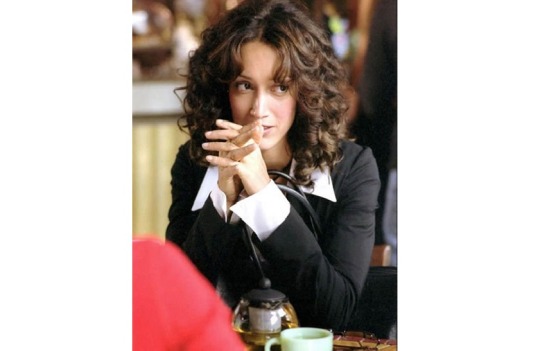
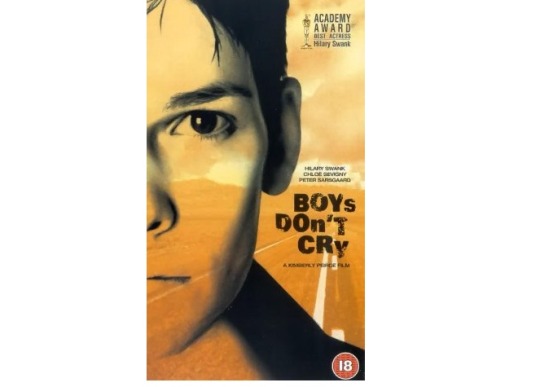
An actor or actress is doing a job. It’s their expertise to take on roles that may differ drastically from their own experiences. Some of the best actors/actresses for queer or trans characters have been straight/cis people. Look at Hilary Swank in the 1999 movie ‘Boys Don’t Cry’ and Jennifer Beals playing Bette Porter on ‘The L Word.’ There are so many other similar examples out there. Those are just two examples of acting that amazed me when I first watched that film and that show…

image

[Jennifer Beals as Bette Porter]

image


[Hilary Swank as Brandon Teena in Boys Don’t Cry]

Hilary Swank is a cis woman who acted for a trans man.

Jennifer Beals is a straight woman who played a lesbian.

I’m sure everyone can think of at least one non-queer, non-trans actor or actress that captured the essence of the queer or trans experience so well that they were surprised to learn the person wasn’t LGBT.

Yes, sometimes it can be disappointing to learn that the actor is not themselves LGBT… (I will admit it crushed me to think of the person who plays Bette being straight in real life, b/c when I first came out I identified so much with her character). But acting is an art. Just because someone’s life is similar to the character does not mean they will play the character well.

So a trans guy playing a trans guy might not do the role justice, if he doesn’t have the necessary acting skills. Plus, if he had already transitioned, it would be hard to pull off a pre-transition trans guy.

When it comes to actors playing roles, the most important question shouldn’t be, How do they identify? It should be: How well can they play this role? CAN they play it authentically? Do they have the skills/ the passion/ the appreciation for the story and character necessary to give it their best? And, if you’re like me.. you might also ask: Do their personal values reflect a non-judgmental attitude?

image

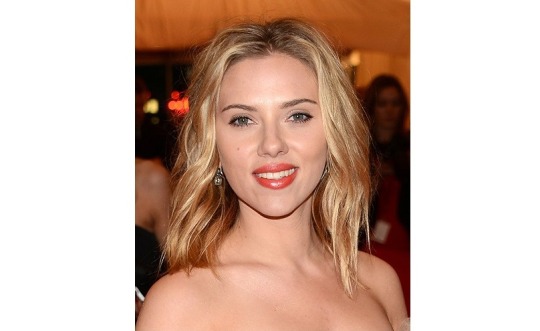
[Scarlett Johansson – just look at that sweet face. How can you hate on that?]

The only thing that surprised me when I heard of this new movie is that it’s SCARLETT JOHANSSON… She was the last person I would expect to play a trans GUY – only because she always seemed to be the embodiment of femininity in her features / outfits / gender expression.

So it’s kind of funny to me. But at the same time, it’s great. It’s great that a cis woman who has that kind of reputation would care enough about the trans male experience to take on a role like that.

That’s a beautiful thing. Why is anyone saying negative things about it?

People need to go watch some movies and films with great acting for LGBT characters and then go check out the actor/actress’ real life sexual orientation/gender identity. Do it the other way around too (for queer actors playing straight characters).

That’s the other thing people need to remember. If you start demanding that actors only play characters with the same sexual orientation as them, it’s going to affect queer actors/actresses too. Imagine how limiting that would be for their career if they can only play queer or trans characters always (Especially considering there’s already a sore lack of these in mainstream fiction.)

~Unconditional Love~

I know what Unconditional Love is because my lesbian girlfriend promised me that if there is a Heaven (not the Christian heaven, I don’t want to go there even if I could… but just some kind of heaven) and I finally get what I want (to be a biological guy) she would still love me. That is the only thing on the face of this earth that can make me feel loved… that promise.

I believe that what you WANT is as much a part of who you are as what you actually have.

All these transphobic hypocrites.. I’d love to see how they act if they have the ability to actually CHOOSE.. to choose their body, choose their life, choose their family, their friends, their surroundings. The problem with this dumb world is that people don’t give each other the full range of options from which to choose.. and that’s sad. Because when you live and think like that, all you’ll ever know is Conditional love. It’s nothing compared to the real thing.

image

How Trump’s Trans Military Ban Backfired. Spectacularly.

I always thought of the Trump presidency as the last death throe of a dying system… so this is not surprising to me. There’s something called the ‘dustbin of history’, it’s where old ideas and those who represent repressive beliefs belong. Sooner or later.

I don’t know about Politics, but there are still occupational fields in which TALENT and DISCIPLINE means more than empty air.. in which, you know, QUALIFICATIONS actually matter.

The only thing I ever have to say to this scum is that he should go back to reality tv because that’s all he’s good at, and even in that he’s less than third rate.

My favourite part of that entire article was this bit:

Judge Kollar-Kotelly wrote in hers last October that transgender people are a “discernible class” who “have suffered, and continue to suffer, severe persecution and discrimination” but display “exemplary military service” regardless.

How Trump’s Trans Military Ban Backfired. Spectacularly.

Singular They

This is an essay I wrote for a grammar course, about the use of singular ‘They’, edited a bit:

My essay:

Any applied study of English
grammar would reveal that language comprises a constantly evolving set of
conventions. For this reason, language experts often find themselves warring
over the rules of grammar. These people typically fall into two main factions. Prescriptivists are grammarians
who recommend writers follow “long-established” rules, viewing any deviations
as “incorrect” usage; descriptivists, on the other hand, are linguistic experts who assert that
“a language is defined
by how its users speak and write it, and that language ‘authorities’
can only describe usages, not allow or disallow
them”. One example of a practice under dispute is the use
of they as a singular pronoun, with a
singular, indefinite antecedent. By examining the history of this usage, we can
begin to see how much a language is shaped by the people who use it, often to
the point of persuading even the most inflexible of prescriptivists to bend the
rules a little to reflect changing times.

Dennis Baron, a
professor of English and linguistics at the University of Illinois,
reveals through his research that people have been seeking a common gender pronoun
for more than two centuries. Some past suggestions included hi, le,
hiser, and thon, but
none were universally accepted. Meanwhile, the use of they as a singular, common gender pronoun can be observed in the
works of many well-known writers, from Chaucer to Shakespeare. As Linguist and
writer, Jonathon Owen, points out in his
blog, the disagreements arose when prescriptivists began favouring the use of he as an all-inclusive, singular pronoun
during the eighteenth and nineteenth centuries. This was problematic because the
use of primarily masculine pronouns to refer to a common gender caused readers
to envision a male subject, even when the context did not specify gender. The
result was that many felt excluded—both women and gender non-conforming
individuals alike.

In his discussion of
the history of pronouns on a podcast
by MPR
News, Professor Baron takes us back to the matter of
“correctness”. He notes that in earlier examples of written language, the
resistance to the use of they as a
singular pronoun had more to do with grammatical correctness and logic than
inclusivity. The
pronoun-antecedent
rule holds that a pronoun must agree with its antecedent in both number as well
as gender. Baron gives us the example
phrase:

                                          Everyone loves his
mother
.

The
issue with this phrase, as Baron explains it, is that although his (being singular) agrees in number
with its antecedent, everyone, it
fails to meet the gender-agreement part of the pronoun-antecedent rule, since everyone is an indefinite, singular
pronoun that could refer to either gender. By this rule, using singular they would not be any more correct, as
it would fail the number-agreement part of the pronoun-antecedent rule, they being plural while everyone is singular.

[insert Loosely connected images, displaying prescriptivism]

image
image

Modern day conversations place more
of an emphasis on the question of inclusivity as opposed to convention. The Merriam-Webster
dictionary recognizes that “Though singular they
is old, they as a non-binary pronoun
is new. [It is used] for a person whose gender is known, but who does not
identify as male or female”. Kristen Hare, a media journalist at
Poynter Institute, echoes this observation when
she speaks of print media. In 2014, the Wall
Street Journal
began allowing the use of singular they to refer to contributors that did not identify with a specific
gender. Soon afterwards, the New York
Times
and Washington Post followed.
More and more Universities and Colleges are also making changes to school
policies to include gender-neutral pronouns for students to choose from in
their registration processes.  Data
collected indicates they as one of
the main choices made by gender non-conforming students.

John
Eastwood writes, in his Oxford Guide to
English Grammar
, that in modern times the
use of he as a common gender pronoun
is “less common than it used to be.” Eastwood is of the opinion that singular they is “neater than [her or she]” and is common in informal
contexts.

Other
academics and grammarians have mixed views, however. Some still recommend using
the generic he or she coordinate with
singular, indefinite antecedents—or avoiding pronouns altogether. Dictionaries
such as the Canadian Oxford Dictionary
list the singular use of they as
being “disputed,” though popular, while the Merriam-Webster
dictionary lists it as a respectable secondary option to the old convention,
citing that it’s been used in
both literary and formal contexts alike.
Despite all the recent acceptance in the mainstream, authors Patricia T.
O’Conner and Stewart Kellerman feel that although singular they has a long history in usage, it still has a long way to go
before becoming universally accepted.

In
light of this history, we are left with a question of what to do while the
natural process of language evolution takes place. For the time being, when it
comes to singular they, choosing to
subscribe to the prescriptivist or descriptivist view appears to be a matter of
personal preference. As a student of literature, an aspiring writer, and
someone who identifies as a member of the trans community, I too share the
mixed feelings of many others. I used to think that the rejection of singular they was driven purely by transphobia. I
can see now that this assumption was largely the result of having grown up with
the modern usage and attitudes.  I’ve learned that this fight
was always more about linguistics and the rules of grammar than intentional transphobia.
Although one does have to wonder whether things might’ve been different if non-binary
people came out back when these rules were being made…

While trans people may not
have been part of the picture back when more people were closeted, in
today’s world the use of pronouns cannot be entirely removed from its implications for the trans community.

Design a site like this with WordPress.com
Get started