It is unfortunately not in English but I have screencapped a translated version below.
As for the radio interview, I don’t know if there’s an English translation for that. If someone here knows what is being said, it would be nice to have a summary.
Here is the English translation of the article (you can find the radio interview in the audio player at the end of the article):
[The below was a submission from general-sleepy, in July 2014, to the rainbowamory Tumblr]
general-sleepy asked: I just about jumped up and down when I found this blog. Another person out there who supports cousin couples’ rights, and LGBT+ rights to boot! Thanks so much for making this blog. Hopefully you can help to dispel some of the misinformation out there.
Hi, you have no idea how happy I was to see your message!! 🙂 Aside from thefinalmanifesto, who also blogs on similar topics), yours was my first fan mail. 😀
You’re welcome. And I am certainly going to do my best to help dispel some of those negative stereotypes and assumptions, as well as expose some of the hypocrisy that exists within minority groups towards other minorities. The purpose of this blog is to bring together two communities, to get them to see they are really not that different in their struggles for happiness and freedom. I hope I can get at least some people from each side to understand that one kind of love is not better than the other, they are just different expressions of the same feeling.
Neither of them are wrong or immoral in any way. They are both natural and deserve to be treated with dignity. Thank you for the encouragement! Hope to see you around! 🙂
[This is an old post from Tumblr, originally posted in July 2014]
As you would know, there are many different kinds of coming out; coming out to your friends, family, co-workers, etc. And the act of coming out is a lifelong process… But in this blog, I am going to try and give a few tips that might help you figure out How ToCome Out To Yourself. Some people find coming out to family or friends to be the most difficult thing, but from my experience, coming out to myself was the hardest step of all. Once you’re past that, you can take your time with the rest.
In order to get anywhere in your path of self-discovery, you need to start peeling layers – the layers of denial. If you go to YouTube and type in ‘Coming Out’ on the search bar, you will get pages upon pages of LGBTQ people sharing their personal stories. If you are questioning your gender, there are lots of Trans or genderqueer Coming Out stories as well.
If you are confident that you are straight and cisgendered, then you should be able to hear these stories and not feel anxious? Right?
If you do feel anxious, restless, or uncomfortable while hearing about gay people coming out, it maybe a sign that you are suffering from Internal Homophobia. (This is when you go out of your way to avoid LGBT stuff because you are secretly lesbian or gay or trans yourself). Internal homophobia can indicate that you have a fragile sense of self, that you are struggling to keep together a false visage so desperately that it is in danger of falling apart with the slightest contradiction.
For me it was a long process, but what finally tipped me over the edge and helped me make up my mind to come out was actually a YouTube video. I tried to find it again to thank the person who made it, but it was gone. In it, a woman was talking about coming out as intersex. She referred to a book called “Beautiful Lies” (I think it’s the one by Lisa Unger).
She said that everyone grows up being given a role. The people in your family act out their roles like in a play and they expect you to do the same with your assigned part (e.g. that of a straight, cisgender person). If you decide that you want a different role, everything has to be restructured again to take that change into account. The worst that can happen is they kick you out of the play… or… they rewrite it so that you can play the role of your choice, and life goes on. If you go on playing the role they gave you, the one that doesn’t suit you, the structure won’t be shaken, but you will be living a lie. And ultimately, you will be the one who is unhappy.
After seeing this, I asked myself some questions. If you are questioning your sexuality, try asking yourself these questions. Remember, no one needs to know. This self-examination is between you and yourself, in your head. No one has to know the results unless you want them to. So be as honest as possible with the answers:
✭1. How did you picture your future when you were
little? (Getting married? Having kids with the opposite sex? Playing a cisgendered, heterosexual role your whole life?)
✭2. Did you ever have any secret fantasies you never told anyone about? (Wanting to BE the opposite sex yourself? Fantasizing about the same sex?)
✭3. Who would you rather have sex with? (a girl or a guy? Or either one?)
✭4. Who would you rather be in bed with at the end of the day? (a guy or a girl? Or either one?)
✭5. If you were to come out as gay, what is the WORST that can happen? (Who would you disappoint? Would family disown you? Will you lose friends?)
✭6. If you were to come out, what is the BEST that can happen? (Can you be happier? Can you finally explore all those urges and desires you’ve so long pretended weren’t really yours? Can you build a more authentic, honest kind of future for yourself? Will you feel more alive and autonomous, rather than resigned and repressed? Will you gain new friends you can be yourself around?)
✭7. Did you look forward to your originally pictured Future? Or did you look upon it as a kind of inevitable ‘fate’?
✭8. Lastly. Can you let go of your originally pictured Future if it means having a New Future you can build from scratch? (Marrying a Same sex partner, having children with them through adoption or other means, having sex the way you want, etc)
✭
If you answer these questions and others honestly, you might be able to come out to yourself. After that, it is up to you to decide what you are going to do with this new knowledge.
You may find you need to come out of a closet within a closet within a closet… You may come out as bi first, then gay, then Trans (pretty much my journey) – as you overcome one internal phobia at a time… so don’t stop peeling those layers until you’re absolutely sure you have reached your core. Some people go on discovering new things about their sexuality all throughout their life. That’s why they say ‘sexuality is Fluid.’
You deserve to be happy, to define your own happiness. Someone has given you a role because they think that’s what you should want. If you never ask yourself, you will never know. And you will live your life feeling a kind of emptiness and lack of enthusiasm where passion and fulfillment should be.
Sooner or later you’re bound to see that deceiving yourself is a lot harder to do than deceiving other people.
[This is an old post from Tumblr, originally posted in July 2014. The link to the website referenced no longer works, but the information was from there and you can find those facts elsewhere too.]
I’m not an expert on this topic, but I will share some basic information I found while reading up on it. If you’ve done your research then you will most likely know these things already.
According to http://www.talkinggenetics.co.uk (a Health Care service that supports consanguineous couples and families) one of the most common problems that consanguineous couples may run into when it comes to making a family, is that of Autosomal Recessive Inheritance. Autosomal means that it can affect both female and male children.
If you follow this link and click on the first picture to the right of the page, you will be led through a video which will explain in a simplified form how this type of gene transfer works, and what are the chances of having a child with a genetic disorder.
According to studies done on this subject, the chances of having a child with a genetic defect for a cousin couple is double the risk for a non-related couple. But the risk, to begin with, is not large, and studies have shown that cousin couples have a 93% chance of having healthy children.
Having a higher risk of passing on health issues does not necessarily mean you will encounter problems, as the risks for cousin couples are not significantly higher than that between any two, un-related people. The reason that there is a risk at all is because a couple that are related would share more genes (that are likely to be the same type of recessive gene) than those who are unrelated, since they will have received these genes from the same family tree. And if the child gets a faulty gene from each parent, this is when it may affect their offspring. There is a 25 percent chance of this happening, but only IF the parents are both carriers of the samekind of bad gene.
Since so much of this is dependent on your individual genetics and the health history of your shared ancestry, it is important to seek out genetic counseling to help you make an informed decision on what’s right for you.
This process would involve obtaining a medical history of your family (including identifying any diseases that run in the bloodline), considering patterns of inheritance of a specific condition that may suggest the chance of a recurrence down the line, genetic testing (by blood samples), as well as finding resources (for both emotional support & self-education).
Since the Internet is full of unreliable and conflicting information, the best way to get an accurate assessment of your options is to go to a professional genetic councilor. Since cousin marriages are common in certain cultures, there will always be services available for people in these kinds of relationships. The best thing about those services is that they are non-directive, which means that the third party will listen to their clients’ concerns and views, guiding the clients to evaluate their own needs and make their own decisions based on the facts, without bias.
I’d also like to add that I know someone who is in a cousin marriage. They have three children together, who are all healthy. The wife must’ve been in her 30s and the husband in his 40s when they had their third child, but this child is as healthy as the first two, who they had years before her.
[This is an old post from Tumblr, first posted in July 2014]
The definition of Prejudice is : “preconceived opinion that is not based on reason or actual experience.”
In this post, I am going to discuss my personal experiences with prejudice, and why I think it’s important for people to challenge the way they think about things, that is, if their opinions are hurtful to other people’s freedoms.
I used to be a very critical, judgmental person, who didn’t think twice about cringing along with the rest of them whenever I heard or saw something that was considered ‘taboo’ in society. This only changed when I realized that I was actually ‘one of them’ (potential target) and that I was in denial about it for the longest time because of the fear of being judged. My personal experience has proven to me that it is possible for people to overcome prejudices, even if they are surrounded by them every day from all directions.
How do you do it? You simply begin to think for yourself.
I am going to list here some lifelong prejudices I’ve carried around in my head from childhood to adolescence, and some into adulthood. Then I will go on to explain how I overcame them:
Prejudice #1: True love can only exist between two people, otherwise it’s not true love.
Prejudice #2: Same sex couples shouldn’t raise children, because it would be unfair to the kid, who would either never have a mom or never have a dad.
Prejudice #3: Consanguinamory of any kind is wrong, because you’re not supposed to do those things with family members. Family relations should be chaste at all times, like friends without benefits.
OK. That hurt to write… Because I no longer think that way, about any of it.
╰☆╮Let’s take #2 for instance. When I asked myself why I felt that way, I saw that it was because of how I’ve been raised. I never knew things like divorce or single-parenthood. In my culture the family is a very tight unit that cannot be broken once it has been made, no matter how dysfunctional it may become or how unhappy. Spouses are just resigned to stick it out till death. There’s no such thing as second chances, and divorce is looked down upon… But as I grew up, I got to know people that came from different family structures, and saw that they were no less stable than I was. Yea, there might’ve been a void in their hearts due to the absence of one of their parents, but some of the nicest, most intelligent people I’ve met have come from what would be thought of as ‘broken families.’ It really opened my eyes to the possibility that a kid can grow up healthy and happy outside of a traditional family arrangement.
The family of a same-sex couple would be no different. In the end it’s not about having one of each gender to raise you… it’s more important to be loved by whoever raises you–whether two people, one person, or a group of people. I suspect that those children whose parents were absent weren’t sad because they didn’t have ‘one of each gender’ as a parent… they were sad because they felt unloved by one or the other. Just because you have one male and one female parent, doesn’t automatically mean both will cherish you equally or be responsible or stable. Gender has nothing to do with the characteristics that make a great parent. Those characteristics (reliability, knowledge, understanding, emotional stability, affection, selflessness, etc) can exist independent of sex and gender. Therefore, a same-sex couple has just as good a chance at raising a healthy family as any two people of the opposite sex.
╰☆╮Now, for #3. This one is a little strange… I’m not sure at which age I developed this opinion. I think it sort of grew on me overtime. I remember hearing that brothers and sisters get separate rooms when they hit a certain age. The explanation I always got for this was that they were growing children, so they needed their own spaces. Yet, it was never a big deal for siblings of the same sex to share a room well into their teens.
It was only later, when I learned that many people first experiment within the family than would like to admit, did I begin to see that arrangement in a different light.
Maybe it was a way to suppress something that might have naturally occurred between siblings without social conditioning. So no matter how much people try to act like it’s ‘unnatural,’ they seem to know deep down that it is natural. They create stigma to discourage young people from acting on whatever tendencies they may have growing up, without letting them think for a second that it might be natural to have such inclinations or thoughts. This creates guilt, fear, and self-censoring from a young age–which these same kids then pass onto their own.
When I was growing up, I didn’t have to wonder at these changes since I didn’t have a sibling of the opposite sex, so my arrangements were different. Yet even for me, the self-censorship was hard to challenge. So what finally changed my mind? I might go more into this in another blog, but simply put, it was a story. I used to roleplay with someone while growing up and one of my main characters was a boy who fell in love with his cousin (the other player’s made-up character). It wasn’t meant to happen. I was about 14 when this twist happened in the story. And even back then (in the start), I had the vague, unsupported opinion that it was wrong… Yet their relationship (though fictional) was the most beautiful one to me in the whole story. The boy continued to love her, so deeply that I was gradually persuaded to think differently about consanguinamory altogether. I don’t know if someone might laugh at that–if they might say that fiction is not reality. But I believe that you’d have to be the worst kind of hypocrite to accept something (related to human rights) in fiction while denying it reality. That is nothing less than exploiting a serious subject for entertainment, while ignoring real people’s real trials in the world.
I believe in the power of Fiction because it compelled me to educate myself more about the reality of these kinds of love, and support others who are like my character in real life. Which is why I’m here now.
╰☆╮Addressing prejudice #1: Unlike the above two, this one was largely a personal opinion. I didn’t realize that I was projecting my own idea of what makes a relationship onto people whose minds and hearts worked differently from mine. There was someone in a discussion group I attended once, a guy who said he was polyamorous. He was trying to explain what that meant, saying that he had several lovers and that he loved them all in different ways; that he tried to give them all as much of himself as he could, and that he always felt he had more love left over to give to another person. I couldn’t for the life of me wrap my head around this… because I’ve always believed that if you needed more than one person it meant you hadn’t yet found your Soul Mate.
But now, having been through my own life struggles and developed as a person, I see that I had misunderstood him. Polyamory is not for me because I am a possessive, monogamous person who is apt to jealousy. But polyamorous people don’t feel this way. I learned that they are actually more than happy sharing their lovers with new poly people, and that they’re not really plagued by any feelings of jealousy. Most importantly, they are always honest with each other, so there’s no deception going on, no cheating. Their relationships are mutually agreed upon, and there are no secrets or lies between them.
Now whenever I get disturbed at the thought of sharing the person I love, I remind myself it’s because I am monogamous. It doesn’t work for me, but that doesn’t mean it can’t work for someone else.
☾Final Thoughts
Why was I so full of judgment?
For the same reasons so many others still are – Social conditioning and sheer ignorance. And.. fear of not fitting in.
What did I learn about overcoming prejudices?
I learned that overcoming prejudices didn’t invalidate my identity in any way. It just made me a more open-minded person. It freed me from the maze of inner-contradictions, from the tensions of trying to hold onto beliefs that weren’t really mine to begin with, beliefs that were put into my head from the outside world before I learned to think for myself.
I learned that I don’t have to be polyamorous to support polyamorous rights, that I don’t have to be a gay parent to empathize with and support same-sex families, that the freedom to have romantic consanguineous relations is as much a human right as anything else (because blood is just another physical detail; like skin tone, age, gender or sex).
I have come to believe that if you want to change the way the rest of the world works, you have to begin with yourself first. If you don’t work on identifying and overcoming your own prejudices, how can you expect other’s to do the same for you? Maybe right now you are happy being a conformist, but someday you may find that you desire something that is considered ‘unconventional, taboo, unnatural’ by the rest of society. You shouldn’t have to wait till that day to make a path for other people… a path that you yourself (or your children) will also be able to use, if you ever have the need.
Wow, I just started trying to see which posts are missing since I had to copy over all my posts from my Tumblr, which was the original version of this blog…. and I realized there are a bunch missing or incomplete or with broken links… this will take some time to smooth out. If anyone wants to read my original posts properly (from long time ago when I first started this blog), see my Tumblr page.
Things over there may be all over the place too, but all the posts are at least intact. It’s going to take awhile for me to sort out my WordPress so that it reflects everything on the Tumblr page post by post. So, for now, feel free to look at my Tumblr if you want to see everything that should be here.
Meanwhile, I am going to re-post the things that are not on WordPress and fix issues.
[This is an old post originally posted on Tumblr, in July 2014]
I highly, highly, highly recommend you watch Milk if you haven’t already. It is especially great film to show to someone who is new to the gay rights cause, because it examines the struggle from many angles and is just overall one of the most powerful films I’ve ever watched about human rights. (I really don’t see how someone can be a bigot, watch it, and continue being a thoughtless bigot). I also suggest you watch Fire, which gives a unique perspective of homosexuality as experienced within an ethnic group, having to navigate culture-specific stigmas to find their true identity.
All the cousin couples portrayed are First cousins. And of that part of the list, I recommend you watch Creation and Jude because they both delve into the private struggles of people in that kind of relationship, whereas the other cousin-couple films (on this list) don’t really deal with these specific issues (since stigma -internal or external – doesn’t really come up in those others, due mostly to isolation or the different attitude of the time period they’re set in).
I picked these films because this is what I mean when I say ‘Better representation’ in media/art. These are all honest in the way they present their subject matter. There’s more to each than just the romance.
[Transamerica is the only one that doesn’t fit into the ‘romance’ category, since it’s more about the main character’s development as a person]
.
Here’s the List:
.
5 Films That Portray Romance Between Cousins:
Blue Lagoon (1980) “In the Victorian period, two children are shipwrecked on a tropical island in the South Pacific. With no adults to guide them, the two make a simple life together, unaware that sexual maturity will eventually intervene.”
(The Blue Lagoon is a romance novel by Henry De Vere Stacpoole, first published in 1908. The novel is the first of the Blue Lagoon trilogy, the second being The Garden of God (1923) and the third being The Gates of Morning (1925). It has inspired several film adaptations, most notably The Blue Lagoon (1980) starring Brooke Shields as Emmaline and Christopher Atkins as Richard (his name is Dick in the book.)
Jude (1996) “A stonemason steadfastly pursues a cousin he loves. However their love is troubled as he is married to a woman who tricked him into marriage and she is married to a man she does not love. Living out of wedlock, the two are rejected by the townspeople leaving them to struggle in abject poverty.”
(based on Jude the Obscure, a novel by Thomas Hardy)
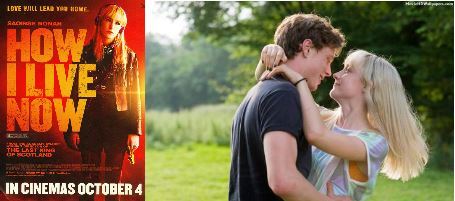
How I Live Now (2013) “An American girl, sent to the English countryside to stay with relatives, finds love and purpose while fighting for her survival as war envelops the world around her.”
(based on How I Live Now, a novel by Meg Rosoff)
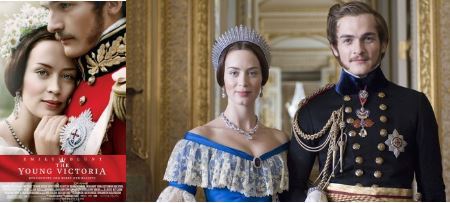
The Young Victoria (2009) “A dramatization of the turbulent first years of Queen Victoria’s rule, and her enduring romance with Prince Albert.”
(This one is based on the real life of Queen Victoria)
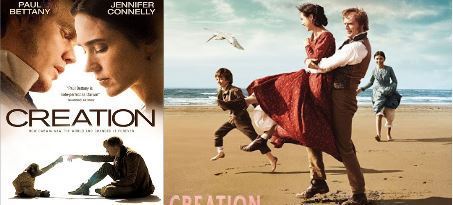
Creation (2009) “English naturalist Charles Darwin struggles to find a balance between his revolutionary theories on evolution and the relationship with religious wife, whose faith contradicts his work.”
(Based on the real life of Charles Darwin)
.
5 Films That Portray Romance Between LGBTQ-identified people (gay, lesbian, Trans):
.
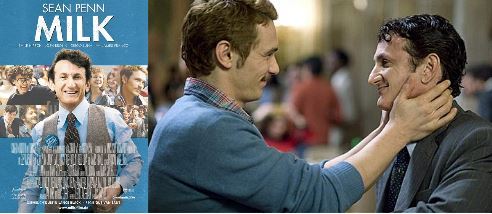
Milk (2008) “The story of Harvey Milk, and his struggles as an American gay activist who fought for gay rights and became California’s first openly gay elected official.”
(based on the real life of Harvey Milk)
The Incredibly True Adventure of Two Girls in Love (1995) “An adventurous love story between two young women of different social and economic backgrounds who find themselves going through all the typical struggles of a new romance.”
(loosely based on the director’s first love) (for those who don’t know, the same actress who plays Tina on The L Word plays the tomboyish girl in this film. XD)
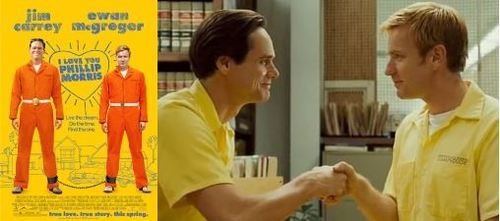
I Love You Phillip Morris (2009) “A cop turns con man once he comes out of the closet. Once imprisoned, he meets the second love of his life, whom he’ll stop at nothing to be with.”
(based on the 1980s and ’90s real-life story of con artist, impostor, and multiple prison escapee Steven Jay Russell, as played by Jim Carrey. Adapted from I Love You Phillip Morris: A True Story of Life, Love, and Prison Breaks by Steve McVicker)
Fire (1996) [couldn’t find a synopsis so I wrote this myself] Sita and Radha, two Indian women (one older, one younger) living in unhappy marriages, find companionship and freedom with each other, including a kind of sexual freedom denied them by the repressively traditional culture they exist in. Fire is also mentioned to be “one of the first mainstream films in India to explicitly show homosexual relations.”
(loosely based on Ismat Chugtai’s 1941 short story, Lihaf (The Quilt))
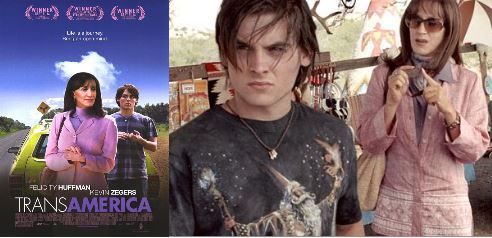
Transamerica (2005) “A pre-operative male-to-female transsexual takes an unexpected journey when she learns that she fathered a son, now a teenage runaway hustling on the streets of New York.”
(in part inspired by the experiences of writer/actress Katherine Connella)
[This is an old post from Tumblr, first posted in July 2014. This was actually my very first blog post and the reason behind starting this blog.]
When it comes to subjects or themes that have social stigma attached to them, it is rare to see them explored in fiction with neutrality. Have you ever watched a film or tv show in which love between cousins is referred to as something distasteful? Something that only unsophisticated, backwards people would engage in?
Consanguinamory themes in fiction:
I’ll give a few examples… In the movie Sweet Home Alabama (which I love to the most part, except for this one bit), there was a fleeting moment of misunderstanding where the main character’s new boyfriend thought that she had once been married to her cousin. Of course, this was a misunderstanding, but his reaction of shock implied that this possibility alone was worse than the fact that she had not told him she had been married before. Then there’s the sitcom, Big Bang Theory (I also enjoy this show, but I hate this one reference), where the character Howard mentions that he had slept with his cousin once. His friends are disturbed by this fact, as well as his girlfriend Bernadette. It’s used as a point of ridicule by everyone who hears of it throughout the show, since it’s mentioned more than once. Howard himself says it like it’s something he half regrets, purely for it’s being a socially unacceptable act rather than any other reason. I am sure there are lots of other examples, though I can’t remember right now off the top of my head. But I know that (in modern fiction or media at least) this topic is rarely mentioned in a neutral tone or with any kind of true empathy.
LGBTQ themes in fiction:
There are also many instances in other films, books, or shows where there are ‘gay’ moments, used mostly to tease the audience, because we all know perfectly well that the characters having these moments are straight in the context of the story. I’ve seen this in anime alot, where we are given blatantly obvious fan service scenes where two girls are in scantily dressed poses together, lingering at the edges of a potential sexual encounter between the two – feeding just enough to the imagination without committing to anything. These kinds of scenes must be what inspires Yuri mangas focusing on exploring the ‘possibilities’ further. I love Yaoi and some Yuri, when done tastefully, but it leaves me feeling empty when I see pairings between characters that don’t even have any chemistry on the actual show. It’s as if the creators are saying, ‘don’t worry, guys. this is not real. you know it, we know it. so just enjoy this ‘alternative’, non-cannon diversion. it can never be anything more.’ And then there are shows in which two same sex characters do have chemistry with each other, but it is never made clear whether or not they are actually gay.
… Reflection:
Now, I am not saying that these kinds of representations are completely useless. They can serve a purpose within the story itself – to show the prejudices of the society the characters inhabit, or to imply that even straight people are capable of having ‘gay’ moments but still be straight at the end of the day… And some characters will be really twisted and abhorrent while having these types of relationships. That’s ok. These representations can be valid in and of themselves, objectively speaking. Where it becomes an issue, I think, is when they become the most prominent and frequently portrayed versions of these relations for all to see.
This pattern projects a very negative view of LGBTQ and consanguineous relationships, making them seem transient, wrong, or downright non-existent. In the long-run, they can end up hurting minorities in real life. Whether intentionally or unintentionally, some artists seem to mold their work to shame marginalized people into giving up what is right for them, be it a lifestyle or a partner. It is no less than bullying on a large scale. The world gets together and bullies those who are different from them, making it hard for those minorities to seek refuge from their realities even in the worlds of fiction.
Fiction feeds into people’s existing prejudices and people’s existing prejudices inevitably shape fiction. This has been one destructive cycle (among many others) that is largely responsible for the stigmas minorities face day to day. One way I see that people have been breaking this cycle is by creating art that offers an alternate view/treatment of these subjects – stories, poetry, paintings, songs, films, characters – that delve deeper into the meanings of these ‘unconventional’ actions and thoughts, helping to present them in a more balance way, educating people on the realities, rather than just using the topics to reinforce misconceptions and endorse myths.
This is one way we can fight back. It will be difficult to convince people at first, but if enough of us touch upon these topics with sincerity and empathy through art, then we have a chance at discrediting the myths over time.
Coming from people who have experienced these stigmas first hand, the Fictions we create have a better chance of being authentic, and therefore powerful enough to overturn the less than mediocre, half-hearted, uninformed explorations of these subjects that currently flood the mainstream.
What are some films/books/shows in which you feel these topics have not been treated honestly or with dignity? What are some that have done the opposite?
-Here is a short LIST OF FILMS that I personally feel handles some of these topics well.
I commissioned him to draw my characters. It took about a week. He was willing to make the little tweaks in the details as much as I wanted and was overall very nice ^_^
What I asked for/context:
A scene in which the girl is drawing an image on the guy’s belly saying “I like…” followed by a sketch of a penis. xD This was meant to show the girl’s silly side because this is the kind of thing she would do to her cousin/lover if she ever found him asleep. Why? Because this is her cruel sense of humor. (it’s permanent marker and she knows his comrades will see this in the men’s showers or something…)
ToxicWaste did a great job and I really love the cute style of his art. He’s very accommodating and easy to communicate with. The drawing makes me smile. Thanks, dude! ❤ You can find his deviantart page here.










 rainbowamory