Reproduction and same-sex cousin couples.

I just wanted to explain the reason I focus on reproduction a lot on this blog. It’s not because I am trying to push it on you. It’s because it’s the area where most stigma arises from, the area most people don’t know much about. Because of ignorance surrounding the topic of reproduction, straight cousin couples have the most amount of stigma placed on them. So that’s why I like to address it from that angle.

Reproduction is definitely not for everyone, for various reasons. But I hope that the information I link to and share is of use to you, whether you are just trying to learn more, or in the process of deciding if you want to have a family.

I haven’t come across same-sex cousin couples info yet but if I do I will post here. Please feel welcome to submit an Ask or Share a Story if you are with your same-sex cousin.

(via https://www.youtube.com/watch?v=YtvVRw5H6cc)

This man is just amazing. 🙂 It’s so nice to know that people like this are here to help the trans community. And he looks young, so hopefully he’ll be practicing for a very long time.

No one CHOOSES their Gender

Trans kids are not confused. They know who they are the way only people who have not yet been assigned a role can know themselves.

You can socialize mannerisms, you can socialize gender roles, you can socialize someone to respond to pronouns like any animal not given the chance to choose its own name, but you cannot “socialize” what is on the inside – the core, the essence.

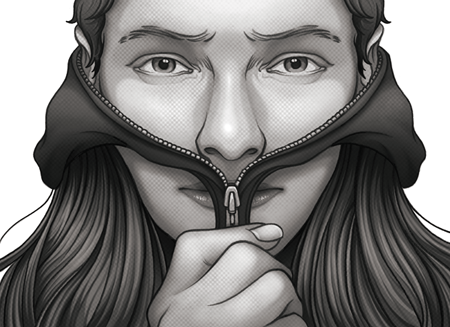
When someone chooses to transition from Male to Female, from Female to Male, or from binary to non-binary, they are not ‘choosing’ their gender. They are dismantling the expectations that society built over them, so they could dig that core self out of the rubble and bring it to the surface for all to see.

If you think that an identity needs to be visible for it to be real, you might as well say nothing we experience on the inside matters.

image

The inside is ALL that matters. If there was nothing there, we’d just be walking bodies, with no inner life.

If you seriously think that telling kids they could transition is damaging, you need to talk to transgender people of all ages. This feeling doesn’t go away, no matter how old someone gets. You know why? Because society cannot CHOOSE someone’s gender for them. It is whatever it always was on the inside.

The only thing a trans person ‘chooses’ is whether or not to peel off the false layers the world wraps them in since childhood, as they go through the assembly line that is “socialization”.

There is nothing in the world more damaging and reductive than telling a kid that their genitals determine their destiny.

You think your cisnormative theories are empowering people? All you’re doing is adding more false layers to suffocate someone’s invisible, but very real, truth.


image from (https://engaged-brains.wikispaces.com/Transgender+Identity)

Quick note about Laverne Cox

I went to see a talk today by Laverne Cox at a theatre where I live. So much of what she said reached me in a personal way and it was good to see that we live by some of the same attitudes (loving yourself and believing that “Success is the best revenge” when it comes to people that have hurt you or made you feel worthless in the past)

I wanted to mention one segment (out of many) that stood out to me.

She was talking about how to build resilience to Shame (the shame that society tries to instill in trans people or on anyone who is marginalized).

She mentioned that finding someone who is going to embrace those parts of you (that are shunned by others) and giving each other mutual understanding is one of the best ways to build that inner strength. She called it a kind of “mirror” effect, where 2 people with similar life experiences can find validation in each other.

I just thought this is so true… building community is the key to dealing with depression and loneliness. Getting more involved in the trans community was the best thing that happened to me in the past 5 years. I can’t believe I didn’t do it earlier. If you’re struggling with something, find someone else who is going through similar struggles. Even if you’re shy. Even if you don’t connect  with people right away, keep trying until you find that one with a ‘mirror’ experience to yours or as close as you can get to that. Isolating yourself will not make you feel half as good as an empathizing friend would.

Androgynous/Feminine Trans Guys

image<—->image

Hi guys. So without turning this into a blog about my transition or something, I feel I should share some of the insights I’ve gained over these past few weeks, just about gender identity and gender expression, since this stuff is still on topic.

If you identify as FTM then you’d be familiar with one or more of the online trans communities out there, including the one on YouTube. You might also be familiar then with some of the divisions and conflicts that exist within the community itself.

Having kind of stepped into this community and looked around a little, I’ve noticed that one of the major points of disagreement among trans people appears to revolve around gender expression, and the various forms of masculinity and femininity that can shine through it.

In particular, there seems to be a lot of negative energy and criticism directed at transgender people that don’t present as stereotypical Male or Female. What I’ve seen is mainly from the FTM side, so I want to comment on that, but I think these same issues seem to exist for certain MTFs as well.

When I say not stereotypical, I’m referring to those FTMs who present themselves in a more feminine way than most (the androgynous or femme FTMs). Some of these guys have had to deal with people telling them that they are not masculine enough to be trans, or that they should simply ‘stay a girl’, or that they should give up their preferred style of dress or cut their hair a certain way in order to ‘pass’ – as if that’s the only goal anyone should ever have when they decide to transition.

I feel like I’ve just gotten an harsh reality check about what I’m going to face in the next few years of my own life… because my ideal gender presentation is the androgynous male look – like Lelouch Lamperouge from the anime Code Geass (That character is the embodiment of my personal masculine ideal). My favourite trans guy on YouTube is this guy (https://www.youtube.com/user/beckdrop/videos). Why? Cause he looks like Lelouch. O.o

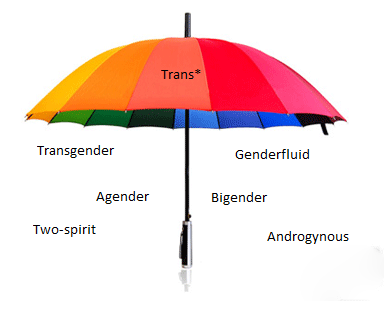
Ok, back to the topic. I feel like people need to take a step back and remind themselves what trans identity really is. You don’t just become trans the moment you take your first hormone shot. And if you stop taking hormones, you don’t stop being trans either (unless you genuinely made a mistake and had never truly identified as transgender to begin with). Trans identity is not defined by these visible, tangible, physical details. It is something all trans-identified people experience inside themselves before they come out. Some trans people never come out, never transition, but still carry around the conflicting emotions and thoughts that are associated with gender dysphoria, in varying levels, throughout their lives. Any one of these paths are valid, and taking any one of them doesn’t make you more or less TRANS, since your gender identity is something that has always been and will always be on the inside, whether or not it ever shows on the outside, regardless of other people acknowledging it.
image

Those FTMs that transition and retain some feminine characteristics or habits or ways of self-expression are no less male than those who want to get as far away from femininity as possible in their outward presentation. Why is there a need to have some kind of overblown power struggle over who gets to claim that label and who doesn’t?

Firstly, look around at the world a little – when you’re on the bus, or travelling on vacation. There are plenty of cis men who act super feminine in the way they dress or the way they interact with others. Does that make them less ‘male’? And the cis women in this world that are extremely masculine… are they less ‘female’ identified? If you were to say yes, then you might as well say there is no difference between a butch woman and a pre-T, masculine transguy.

But there is. And where is the difference? It’s in the gender dysphoria that is experienced in an internal way. A butch lesbian is generally ok with her assigned gender. That’s why butch lesbians even exist. Otherwise they’d all claim to be FTM or seek transition.

What makes a trans guy different is that he’s NOT ok with his assigned gender, and he identifies as male on the inside, whether there’s testosterone coursing through his veins or not. But when we transition and begin to be seen as male, we have more freedom to play around with our gender expression. Isn’t the whole idea of transition about finding happiness/self-acceptance?

Cis guys can do whatever they want without being questioned… they may get made fun of, but no one will doubt they are Male. Because they’ve got the body, all the standard male parts. As trans people, if we make any part of physical appearance a requirement for claiming our Male identity we invalidate trans identity yet again, because we’re saying that it’s what’s on the outside that makes one a man.

You can’t just validate some trans guys and invalidate others. The only way to be consistent about what it means to be trans is to place the emphasis on our internal experience of gender, regardless of what that translates to on the outside.

If you emphasise the physical, the visible, then the cis system wins… because you let them apply their rules to you, blending in among them while ignoring the existence of non-binaries and alternative gender expressions. Maybe you’re happy that way, but what about those that don’t fit in? If you’re going to say they are less male for not acting or looking a certain way, then you might as well give up your own struggle, since by society’s narrow standards none of us would ever be seen for who we really are on the inside as long as we go on trying to say that it’s physical characteristics and mannerisms alone that makes a man or woman.

I don’t think there’s anything wrong with living stealth. Transphobia is incredibly hard to bear, especially when combined with your own internal gender dysphoria. It makes sense that some people don’t even want that label ‘trans’ attached to them, and do not feel they belong in the gay community at all. That’s fine, as long as you’re not spreading ignorance and homophobia.

But if it bothers you so much that feminine/androgynous trans guys exist, then just stay away from them. It’s that simple. Their existence doesn’t invalidate your existence. When you criticize non-binaries and/or alternative gender presentations, all you’re doing is hurting your own cause, and hurting others who are very much like you at the core. Gender dysphoria is the common thread that connects us, not which surgeries we get or whether or not we ever decide to go on hormones or how well we fit into the cis binary at any one point in our lives.

If you don’t deny a feminine cis guy his male identity, then you should be able to respect a feminine trans guy’s male identity, even if you may not fully understand it. In an ideal world, we’d all just be able to choose which body we inhabit, but for now the least we could do is try to see each other’s souls.

image<–Lelouch.

Pic From: http://xxajisai-graphicxx.deviantart.com/art/Render-Lelouch-322476909
The Need for Better Representation in Fiction

hernameisgabe:

rainbowamory:

When it comes to subjects or themes that have social stigma attached to them, it is rare to see them explored in fiction with neutrality. Have you ever watched a film or tv show in which love between cousins is referred to as something distasteful? Something that only unsophisticated, backwards…

This is why I’m writing my book and running this blog.  🙂

That’s awesome! I didn’t get a chance yet to properly check out your project and blog but it’s something I’ve been meaning to do, and will do! I’m working on a story with trans themes myself. And someday I plan to write a series with a main character that is in a relationship with his first cousin from the age of 15 and up. Someone told me incest is a touchy topic but changing that detail about my character’s life is like saying there’s something wrong with it, which I will never ever do, no matter what, especially not to appease the most ignorant groups of people in society. My favourite genre is fantasy/adventure. I’ve always wanted to talk to other people who are working on or planning to write fiction that challenges social stigmas around relationship diversity (nice term by the way! the first time I saw it was on your blog). So good for you and keep doing what you’re doing! 🙂

The Need for Better Representation in Fiction

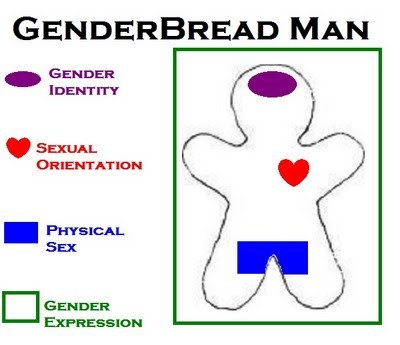
The word “transsexuality” sounds like something related to sexuality, but it’s not. Sexual orientation and sexual identity are terms used to describe who we are attracted to and who we love.

Heterosexual, gay, lesbian, and bisexual are words you are probably familiar with. They describe sexual orientations. We all have a sexual orientation, trans people included.

We all also have a gender identity – the inner feeling that we are a man or a woman, that we are masculine or feminine, or perhaps somewhere on a “continuum” between masculine and feminine.

Being transgendered or transsexual is about gender identity. For trans people, their bodies do not match their inner experience of gender.

Being trans is not the same as being gay – (from the booklet: ‘Families in Transition; a Resource Guide for Parents of Trans Youth’, by CTYS)

웃 T h e . S t i g m a . A r o u n d . O n l i n e . D a t i n g 웃

image

I think many people these days are actually more open to the idea of online dating. But I wanted to share my thoughts anyway because I think there still are some negative attitudes surrounding this method of finding love that don’t really have much reason to back them.

I’m sure you’ve encountered it at one point or other, but there’s this view some seem to hold that online dating is something people turn to when they’ve run out of options in the “real world” or when they are in the older age range with fewer singles available to date. A lot of the time those who criticize are people who have been lucky enough to find their partners without having had to look far. To them, looking for love on the Internet may seem impersonal and strange.

Online dating doesn’t always translate to Long-distance relationship. That’s a whole other kind of experience. What I’m referring to here is finding people online that live close to your area, then asking them out and meeting in real life to begin a relationship shortly afterwards.

There are many reasons why a person would not only use this method, but would prefer it over more traditional ones, including many young people.

Here are some reasons why I believe people may look online for love:

  • Social Anxiety: Some people just don’t have an abundance of social skills that would allow them to flirt freely with potential partners face-to-face in their day to day lives. If they struggle with social anxiety, they would be experiencing a difficult enough time just making friends.Getting out of their shell to look for something more than friendship may be an agonizing process. Looking online would allow them to communicate with far less anxiety and thus be better prepared for the eventual face-to-face meeting. If you’re looking into online dating for this reason, chances are you’ll find others like yourself with whom you’d feel more comfortable interacting, since they too might know what it feels like to be shy.
  • No one around is compatible with you:
  • A person may join a dating site because they cannot find someone in their immediate surroundings that they feel they are compatible with. This person may have little-to-no social anxiety issues. If they don’t, chances are they’ve already tried and possibly exhausted the traditional methods of looking for love (e.g. meeting at an event and giving someone a number, going on blind dates, getting to know someone through mutual friends, etc).
  • These people may be criticized for turning to online dating because they don’t seem like the ‘type’ of person typically associated with online dating. You might’ve had that one friend who is attractive and sociable with many admirers buzzing around them, and been shocked to hear that not only were they still single, but that they had joined an online dating site… If social skills come easy to them, people might wonder what might be wrong with them (do they think no one is good enough for them? Do they have other personality issues that make them undesirable to their existing admirers?) Why else would a ‘social butterfly’ need to turn to cyberspace to find someone?
  • One possibility, however, could be that they’ve tried other avenues already, and that the ‘old fashioned’ ways just haven’t worked out for them… Usually because the people they’ve met in “real life” weren’t right for them.
  • Many people would agree that compatibility is vital to maintaining a healthy relationship. So if you can’t find it with the people around you, what’s wrong with looking online?
  • No time for looking around: If you’ve got an inflexible and loaded work schedule, you probably wouldn’t have spare time to attend events or go to clubs or participate in any other social event that is likely to find you a catch. In this scenario too, online dating would make a great alternative – both convenient and far less stressful. You could always go online for short spurts of time at the end of a long work day, and continue your search without additional strain on your energy. It would take less time to date the right person once you find them than it might to physically go out looking for them in a chance encounter.

MORE

  • You’re Gay! (or Trans or Bi):
  • This is not the least of the reasons why some would turn to online dating, especially young people. It can be a pain to always wonder who’s straight and who’s gay if you’re looking for a same-sex partner, or who would accept your Trans or genderqueer identity. Although Pride Parade time would offer its own abundance of opportunities, for the rest of the year, online dating sites could provide a much easier method of discovering a match without having to investigate who’s gay or lesbian or bi or trans, because it’ll be right there on their profiles.
    • And for you, I recommend: Plenty of Fish, now called http://www.pof.com/  <-this is a free and great site, especially for LGBTQ-identified people! For some reason, there’s a lot of them on there… If it’s still the way it was 3 years ago when I first came across it, it would be a good start for anyone who wants to try finding a date online. You should be able to indicate your sexual orientation on your profile, as well as what kind of relationship you’re looking for (serious, casual, long-term, monogamous, etc). This site is also more active than many others and the profiles on it are more up-to-date.
    • Also check out this article that gives a brief overview of The Best Online Dating Websites for Gay Men. Some of the sites require paid memberships to use, but others are either free or offer a free account with limits.
  • You have unusual or very specific sexual preferences: And by unusual, I just mean…different. e.g. You may want to look for people that are into bdsm, or interracial relationships, or someone sharing an interest in a kind of lifestyle that you don’t feel comfortable talking about with just anyone. An online platform would allow you to be open about it, without the awkwardness of having to tell everyone you know what you’re into.

These are just a few among many reasons people may choose to use online dating sites. Depending on your circumstances and preferences, Online Dating can be a more practical and effective method of finding love than traditional ones.

                                                       image

QUOTES From Other Sources

“The way a dating site works ensures [you] get access to the kind of information that probably wouldn’t be discussed on a first date – like whether they want a family, their religion and so on […]” (Quote From This Article)

“The growing number of marriages and long-term relationships formed as a result of single people using online dating sites is a modern day phenomena.” (Quote From This Article)

“One interviewee felt online dating sites helped him to break out of close-knit social or sexual circles to find new people. Others from smaller urban centres felt online sites helped them to find inroads into the gay community in a larger city that might otherwise seem daunting.” (Quote From Gay Men’s Health Article)

“No matter what dating website or service you try, you should always exercise caution. Don’t give out personal details until you know the other person. If and when you arrange to meet an online match, pick a busy, public place.” (Quote From Article: Why Do People Use Internet Dating?)

__________________________________________________________________

                                           image

And finally, it’s ALL Real Life! The Internet just offers an extra set of options you may not have in your immediate surroundings. People that never would’ve met the usual way could end up meeting online.

I’m definitely a believer in the usefulness of online dating since I met my girlfriend of 3 years through plentyoffish.com. I am an extremely picky person, and if I hadn’t tried online dating and found this specific girl, I’m sure I’d still be single right now… And I know an interracial, straight couple who also met on that same site around same time as me and my partner (they’re still together, and very much in love).

I think a lot of the stigma around online dating also comes from a general mistrust of the Internet. If you don’t personally want to use it, that’s one thing. But please don’t judge those who do. As I’ve outlined above, they have their reasons.

Online dating is not an alternative to ‘reality’. It works like a bridge to extend the boundaries of your reality. In the end, any date you find online is still very much a person – not a bunch of pixels on a screen or an imaginary lover.

If you’re looking to try out an online dating site, this article might me of some use to you:

Making Online Dating More Effective With Good Communication.


What Type of Lesbian Are You? (Does it Matter?)

image

(Image from: LGBT Presentation by Janea Hubbard)

If you’ve been out in the gay community, you may have encountered some of these labels by now: Femme, Lipstick Lesbian – Butch, Stone Butch, Stud – and the many in-betweens (Chapstick, Boi, Soft Butch, Androgynous, Switch, Stem, Futch). It might be necessary to leave some blanks in case any more varieties spring up in the future of the lesbian crop: ______, ______, ______

What type of lesbian are you? Have you ever thought about it? Do you fit into any of the above mentioned categories, or are you a potential filler for one of the blanks? And most importantly,

Does it matter?

Life being a journey, it can take years and many experiences to develop an full understanding of one’s self. A person can be old and still discovering things about themselves – things they might’ve denied in their youth, or completely new facets of identity that only happened to appear in that specific time in their lives.

Some hold the attitude that there’s no rush to define yourself in any fixed way. And that can be very liberating, if in the meantime you are not misleading someone else or letting once-in-a-lifetime opportunities slip past you.

But there can also be a strong pressure from within the community to define yourself, as a preliminary requirement for becoming a recognized member of that community.

In either option there is something to lose. If you rush to define your identity according to strictly defined categories, you risk submerging your real self in order to get stuck playing yet another socially constructed ‘role’, as if it wasn’t hard enough to escape or redefine your originally assigned (straight, cis) role in the coming out process. Yet if you don’t attempt to label yourself even loosely, you might involuntarily be making it difficult for potential partners to seek you out.

Dating is difficult enough in a minority. Divisions according to ‘types’ can only make it moreso. So what do you do if you are unsure? Or if you feel you honestly don’t belong to any of the ready-made categories. Do you put on the label that comes closest to reflecting who you are and hope for the best? Or do you insist on living without a label, knowing that you may be overlooked by those on the lookout for very specific signs in their search for a partner?

Is there a solution? Maybe not an easy one, but it seems the best option would be the one with the least amount of consequences attached to it.

As long as you’re honest with your partner, there should be nothing wrong with taking your time in figuring out your ‘type’. And if nothing suits you perfectly, why not just be yourself? If there are others like you, a whole new category may form around you and them and you wouldn’t have to feel so alone. Just because there are already fixed labels out there, doesn’t mean the Label Maker is out of service. You can always carve out a niche for yourself where you and others like you don’t have to try too hard to belong.

And if you can’t find ‘others like you’ willing to take on a new label together, the best thing to do might be to remind yourself that each person is desirable to someone. No single ‘type’ can seduce the entire community. As long as what you seek is someone (monogamous) or a some people (polyamorous) to like you for you then it may be more beneficial and less painful in the long-term to go without a label.

Because if you do put on a label without feeling fully sure, and you begin to date, you and your partner may or may not be on the same page. This is where life would get complicated. If you tell them you’re one thing and they expect you to stay that way, you could get stuck playing a part again, and find yourself in a place where experimenting with your gender expression can leave the other person feeling disappointed or uncomfortable. e.g. if you say to someone that you’re a soft butch and a few months or years into the relationship you tell them you are actually trans and want to transition, some lesbians and bi girls can be ok with it, others won’t.

There’s nothing you could do if you just realized it with time. However, sometimes a good indication that things may change is that you feel unsure about taking on a label in the start – or not fully comfortable with the labels others place on you. If this is the case, it’s best not to take on a label at all, or at least to delay until you’re sure. This way you leave yourself space to grow, and anyone you date is more likely to accept that your gender expression is not a fixed one – or that you may be one of the blanks in the making.

Yea, this approach might take more patience, be a little more of a lonely road to take. But in the long run, it might be the least risky and the least likely to leave you heartbroken.

Everyone is desirable to someone. By denying your true self and comfort to accommodate someone else’s tastes, you might be making yourself less visible to those that would find you attractive exactly for who you are.

For your amusement, have a look at this page to see the different types of lesbians people have identified over the years. A glance at the comments should show that although there seems to be such an big emphasis placed on taking on a label in the LGBTQ community, many lesbians in real life are unsure of which one describes them best, or feel that more than one label applies to them.

Another option is that you can always take an existing label with its accompanying definitions and add your own dimensions to it. (e.g. be a long-haired Butch instead of a short haired one) Just like not all girls are straight, and not all gay girls look the same, not all categories will contain people that act the exact same way or agree to a single definition of what it means to be Butch or Femme or anything in between. To see this all you’d have to do is pick out a bunch of people from a single ‘type’ and compare them to each other – individual for individual. Are they all the same to you?